🖥️ Lecture Slides
All 86 slides from your six module decks
🔎 Search all 86 slides
Modules 1-3 · Clinical judgment, medications, infection control, post-mortem
Title slide: NUR 125 master blueprint for medications, infection control, and patient care.
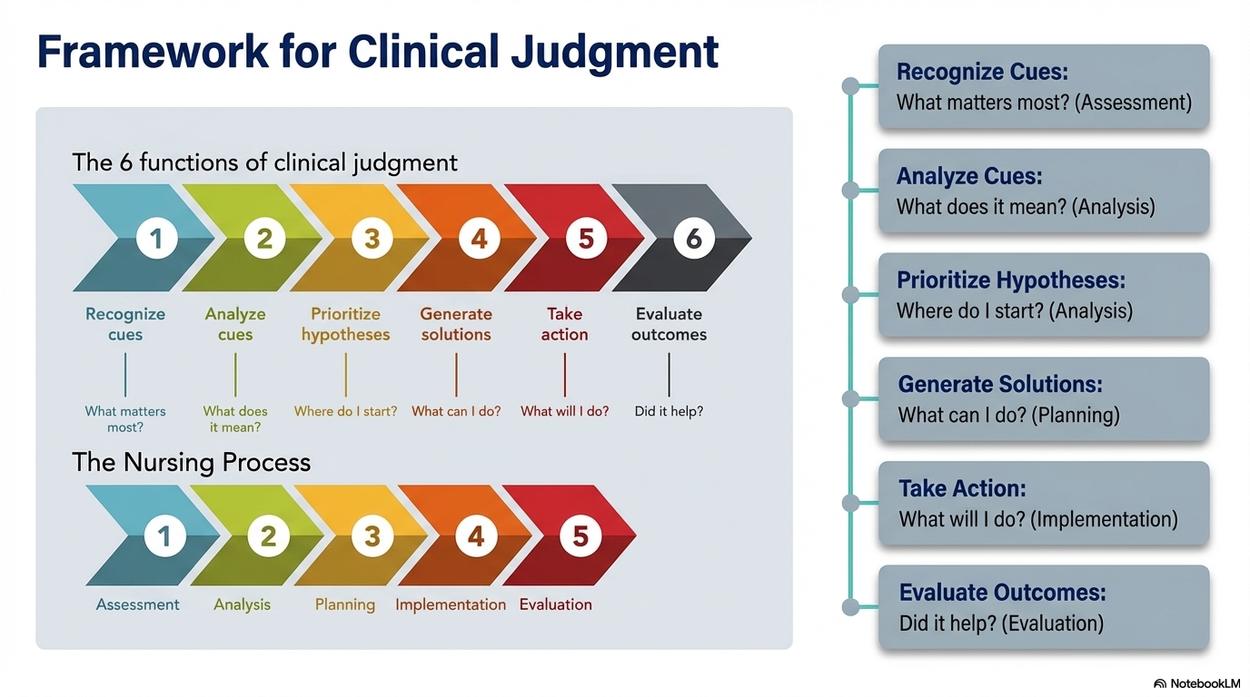
NCJMM 6 functions: recognize/analyze cues, prioritize hypotheses, generate solutions, act, evaluate vs ADPIE.
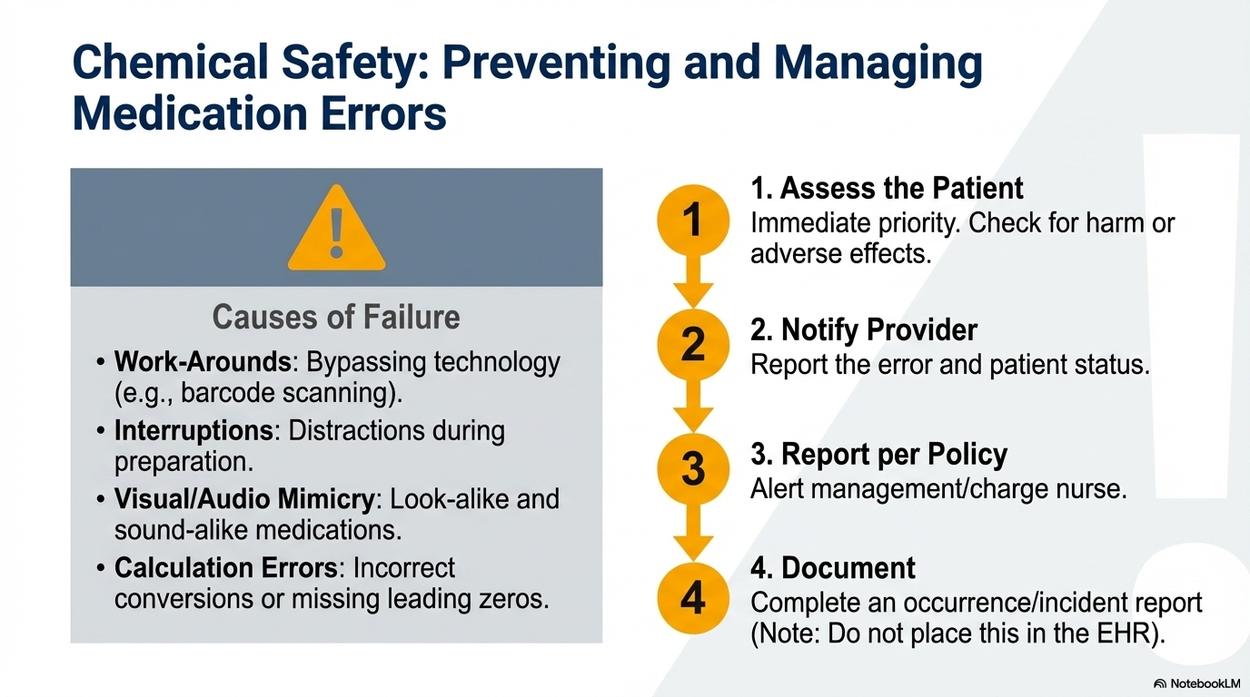
Causes: work-arounds, interruptions, look/sound-alikes, math errors; then assess, notify, report, document.
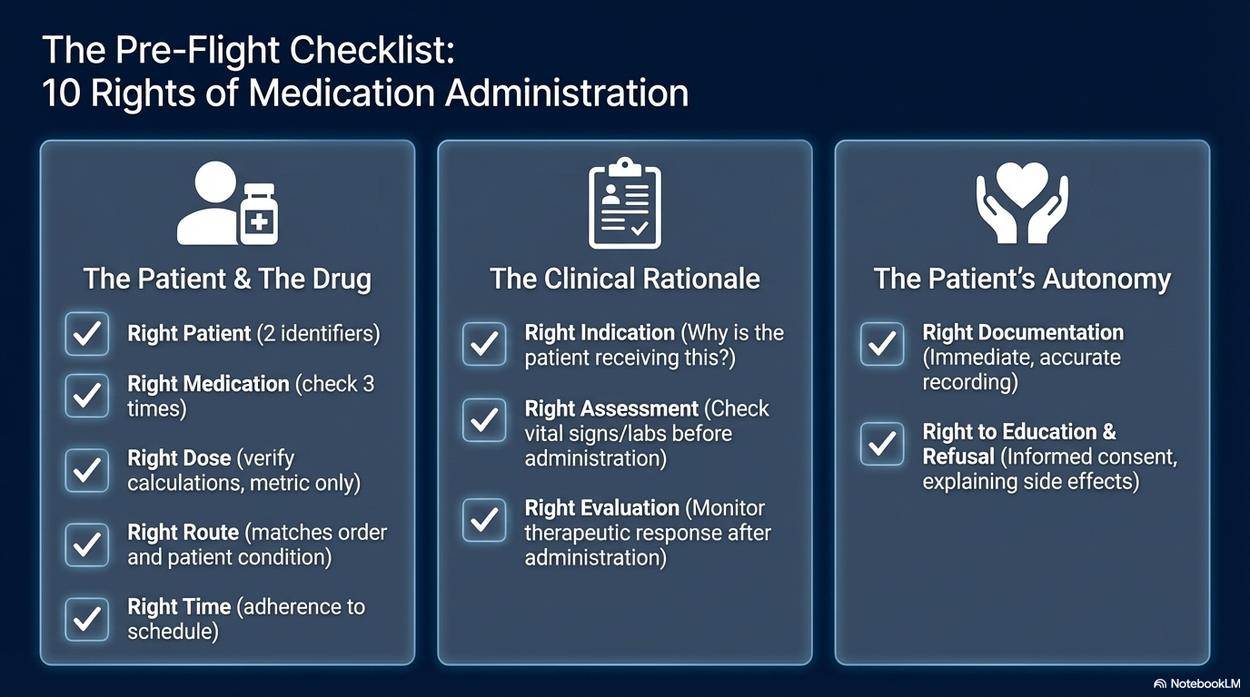
Patient (2 IDs), medication, dose, route, time, indication, assessment, evaluation, documentation, education.
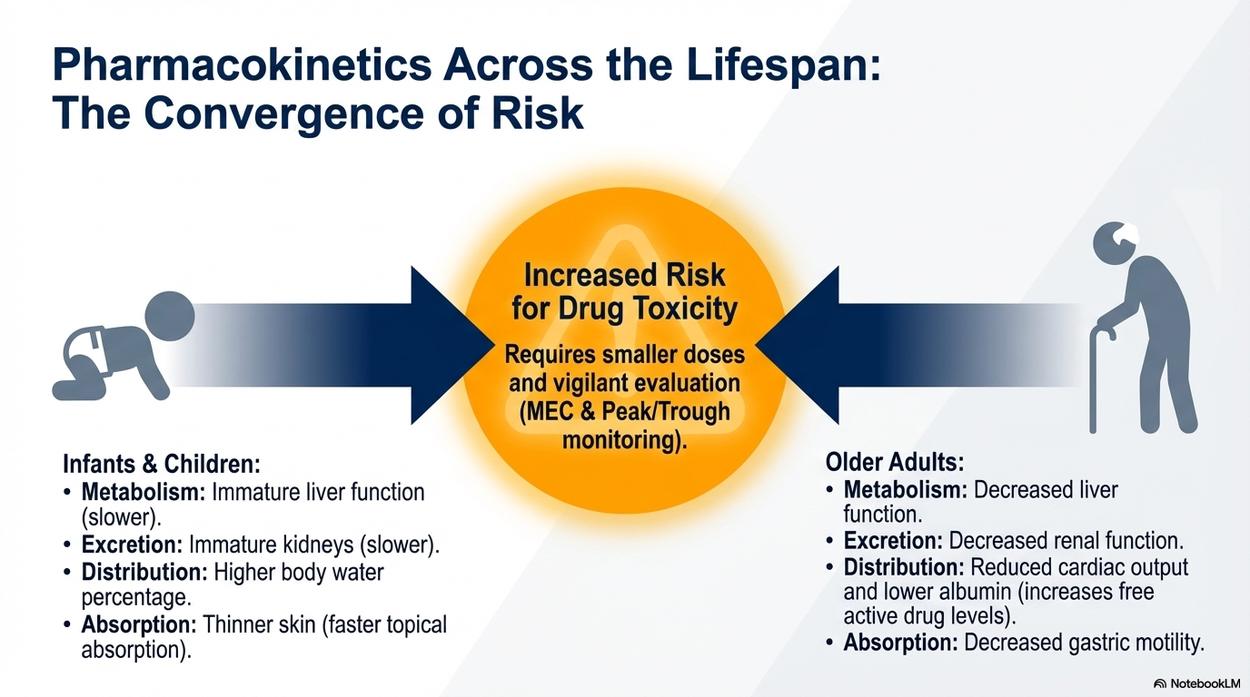
Infant vs older-adult ADME changes converging on toxicity risk; MEC and peak/trough monitoring.
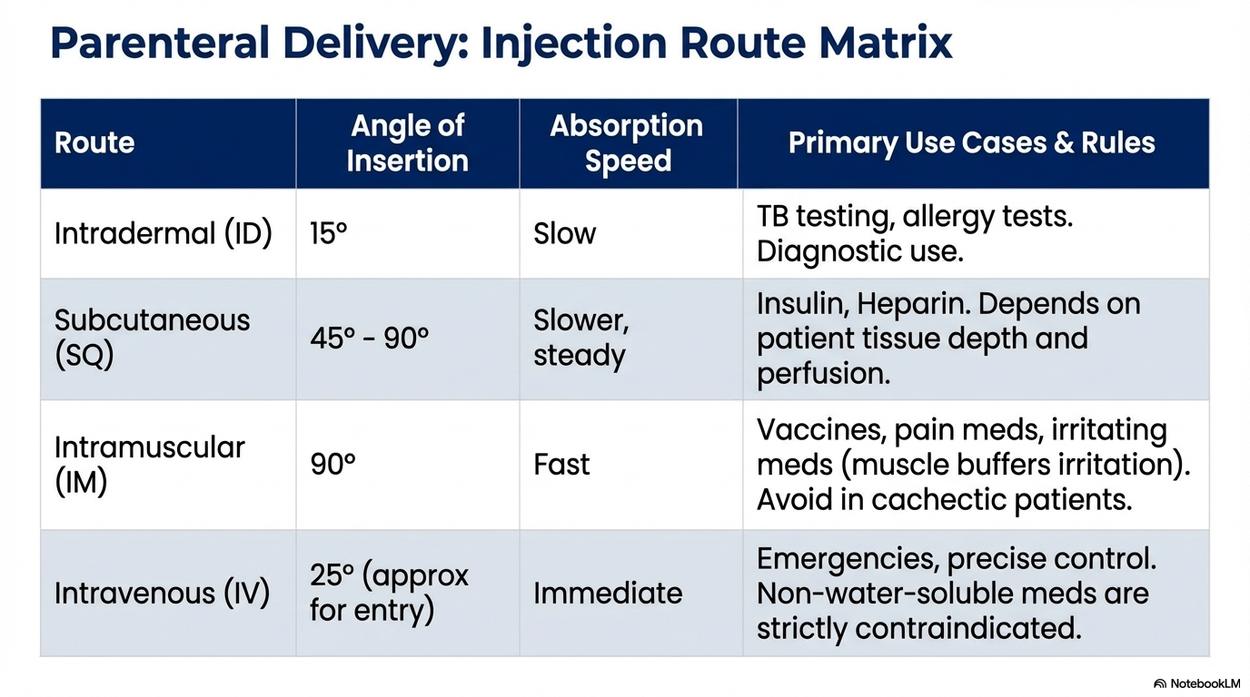
ID 15 deg, SQ 45-90 deg, IM 90 deg, IV ~25 deg with absorption speed and uses (TB test, insulin/heparin, vaccines).
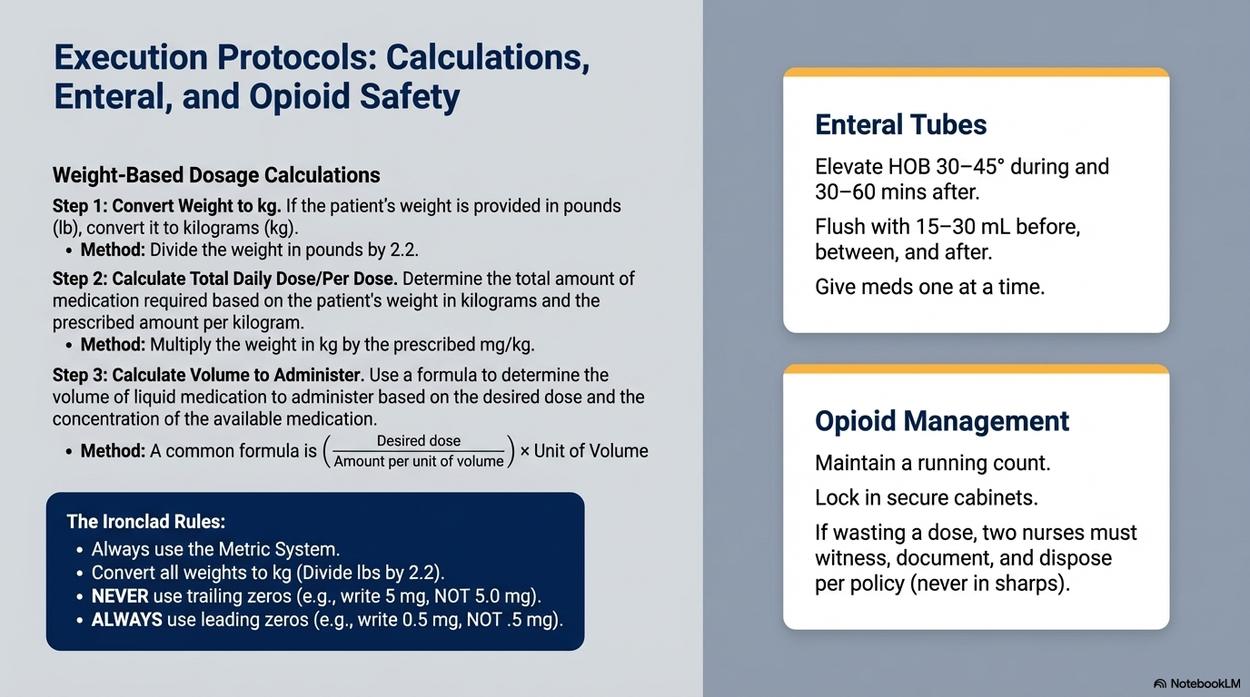
lb/2.2 to kg, desired-over-have, leading not trailing zeros; HOB 30-45, 15-30 mL flush, 2-nurse opioid waste.
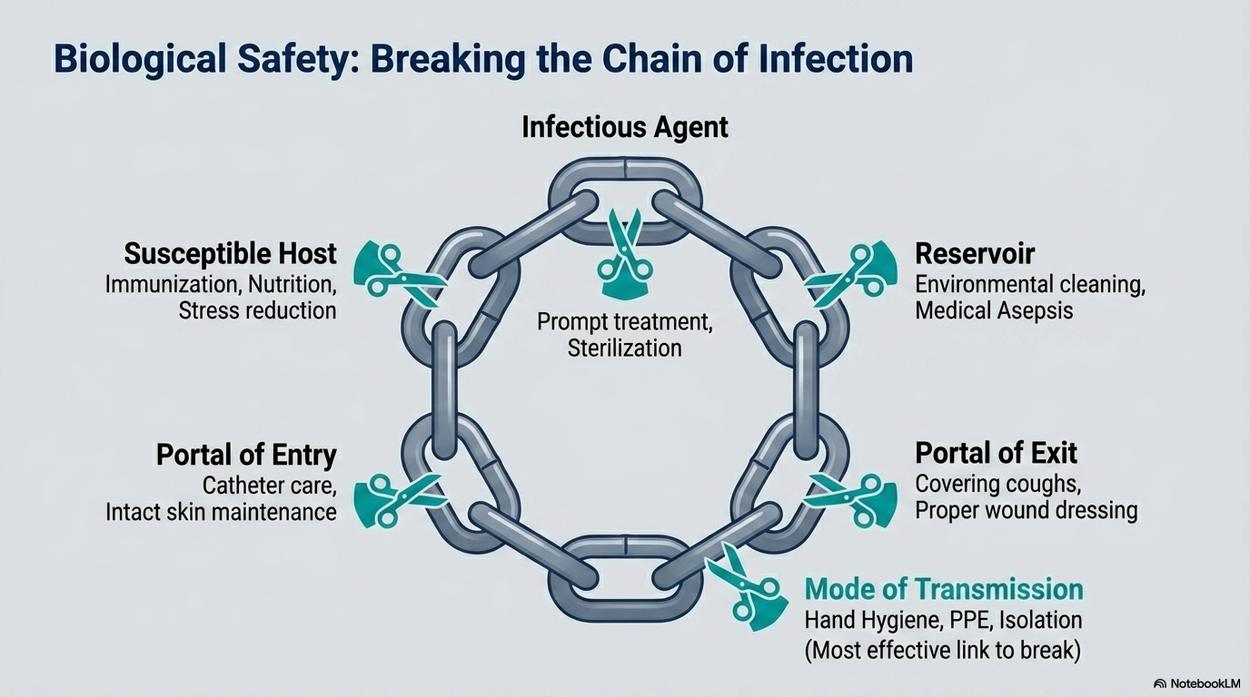
Six links: agent, reservoir, portal of exit, transmission, portal of entry, host; transmission best to break.
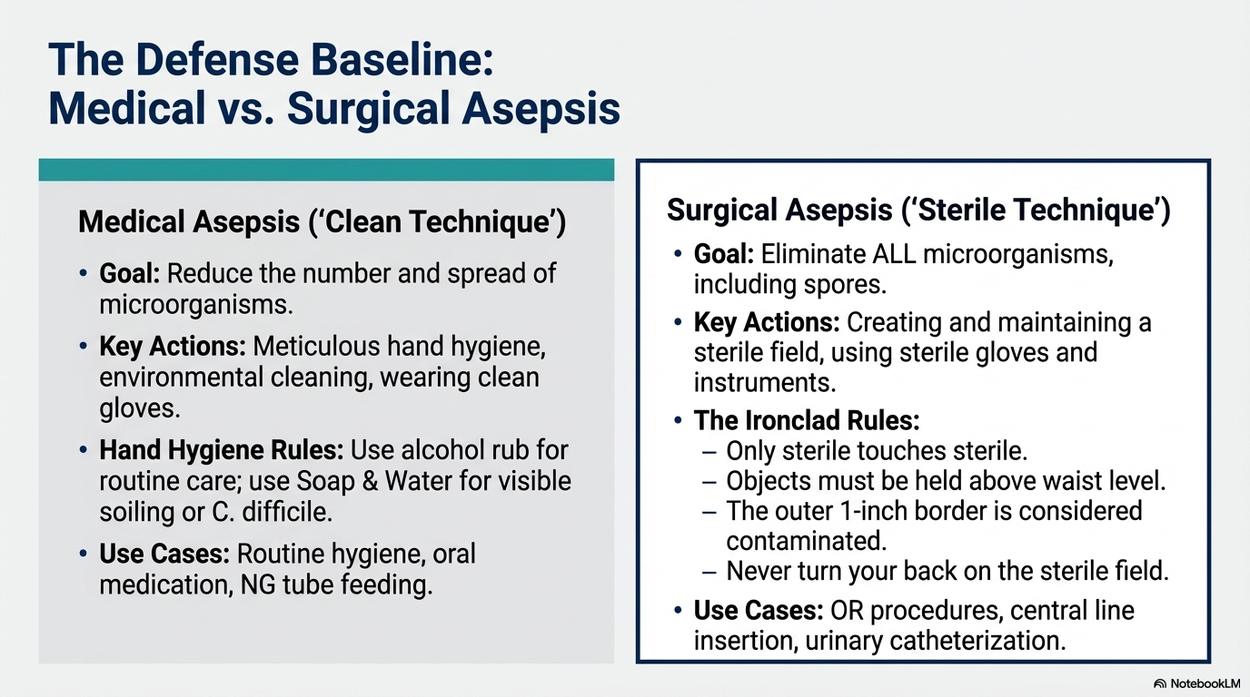
Clean vs sterile; alcohol rub vs soap for C. diff; sterile-to-sterile, above waist, 1-inch border dirty.
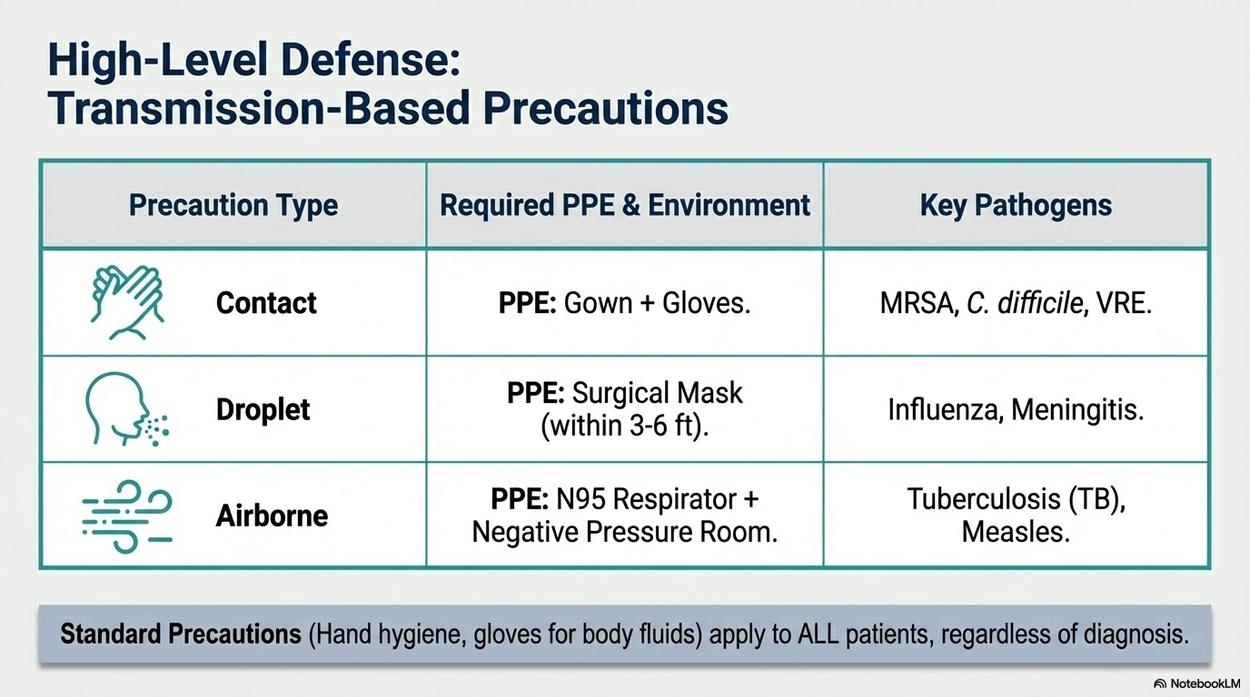
Contact (gown+gloves, MRSA/C. diff), Droplet (mask 3-6 ft, flu), Airborne (N95 + negative pressure, TB).
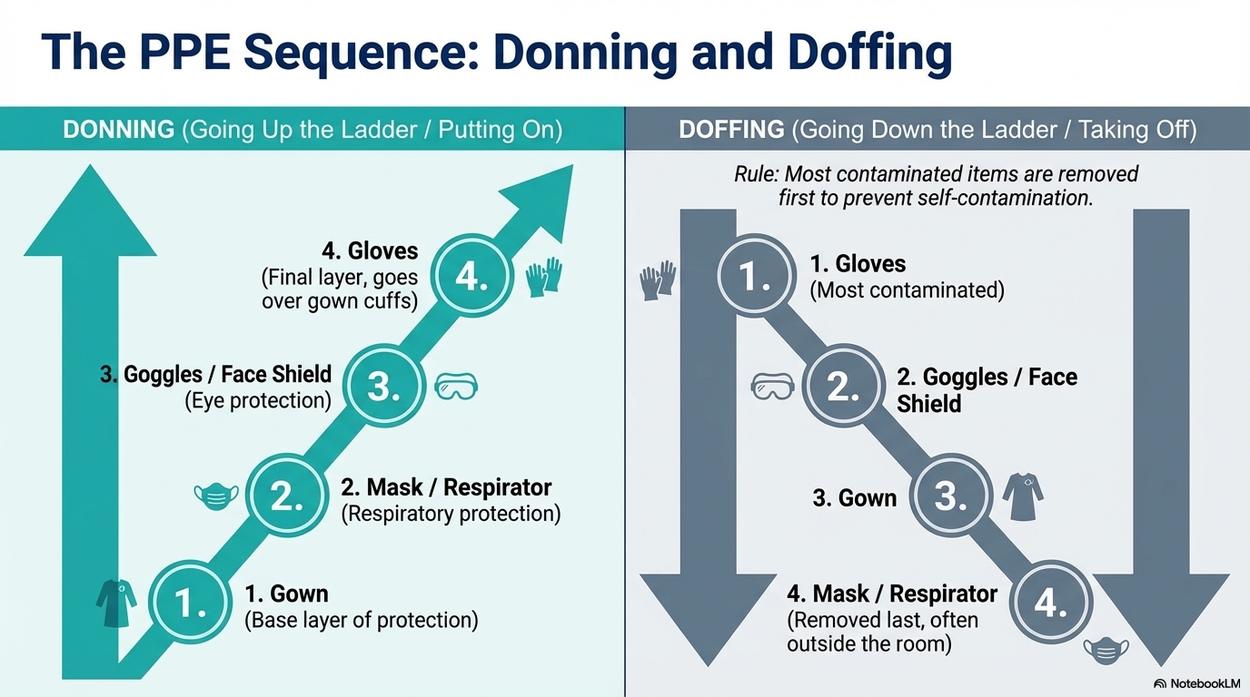
Don gown, mask, goggles, gloves; doff gloves, goggles, gown, mask last outside the room.
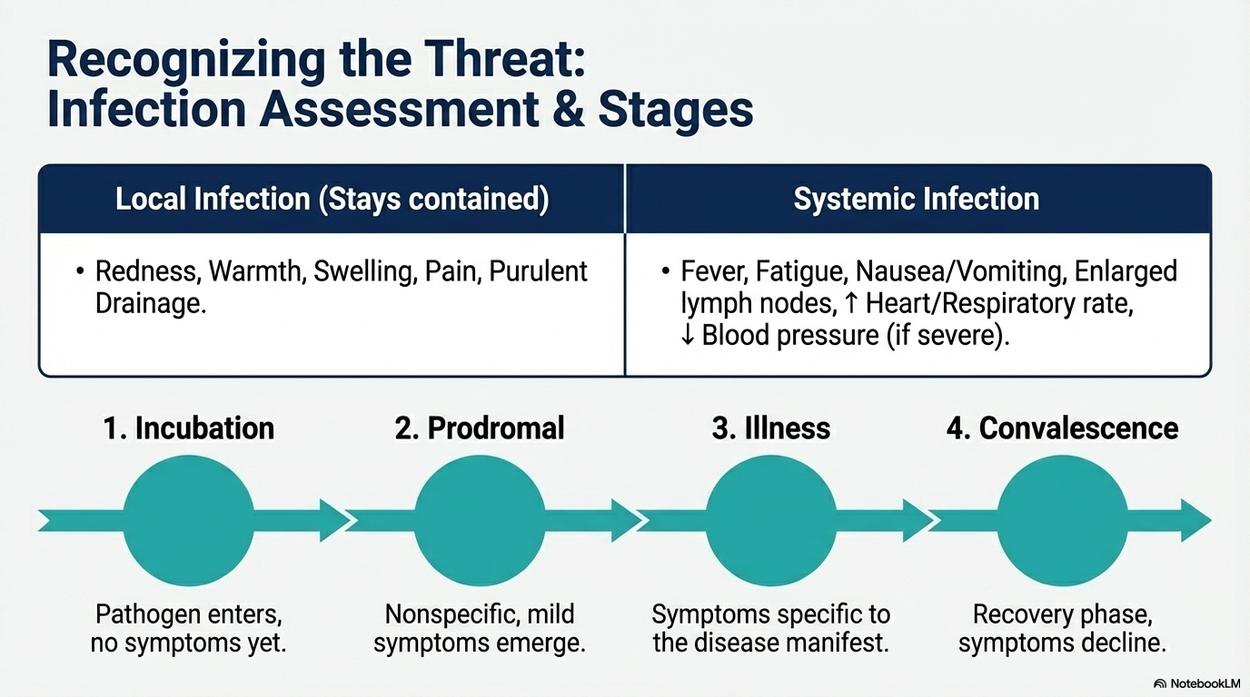
Local (redness, warmth, purulent drainage) vs systemic signs; incubation, prodromal, illness, convalescence.
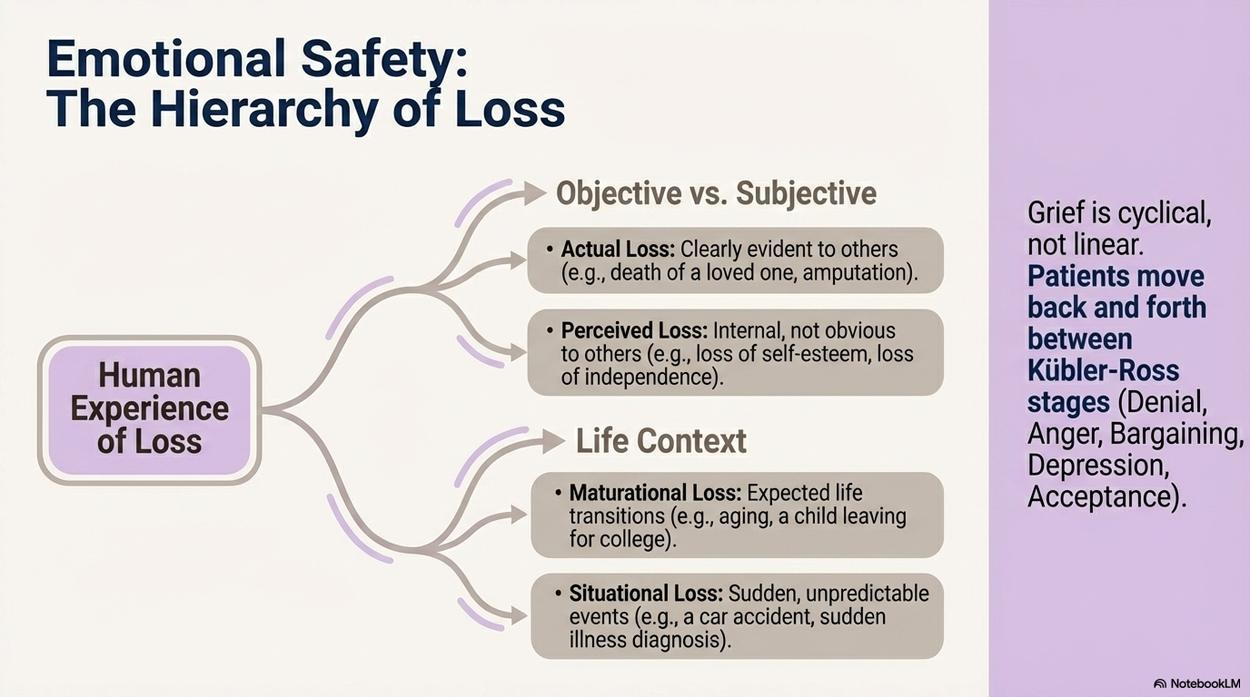
Actual vs perceived, maturational vs situational loss; Kubler-Ross stages are cyclical, not linear.
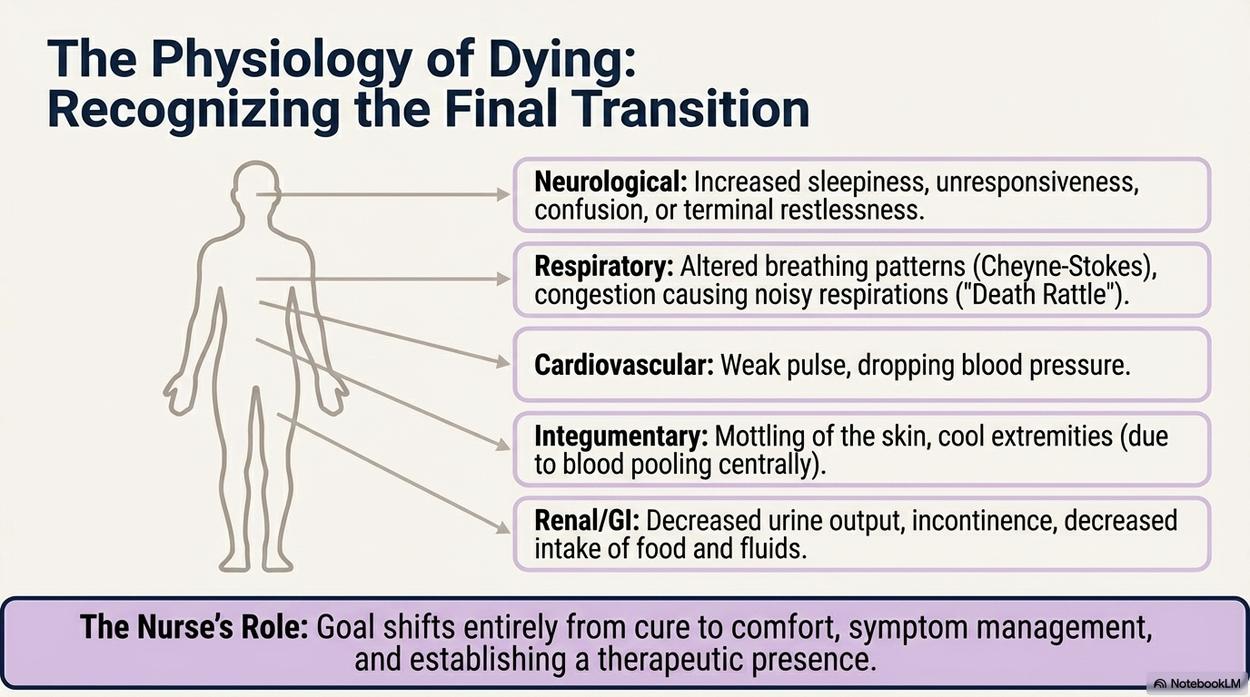
Terminal restlessness, Cheyne-Stokes, death rattle, weak pulse, mottling, low urine output; cure to comfort.
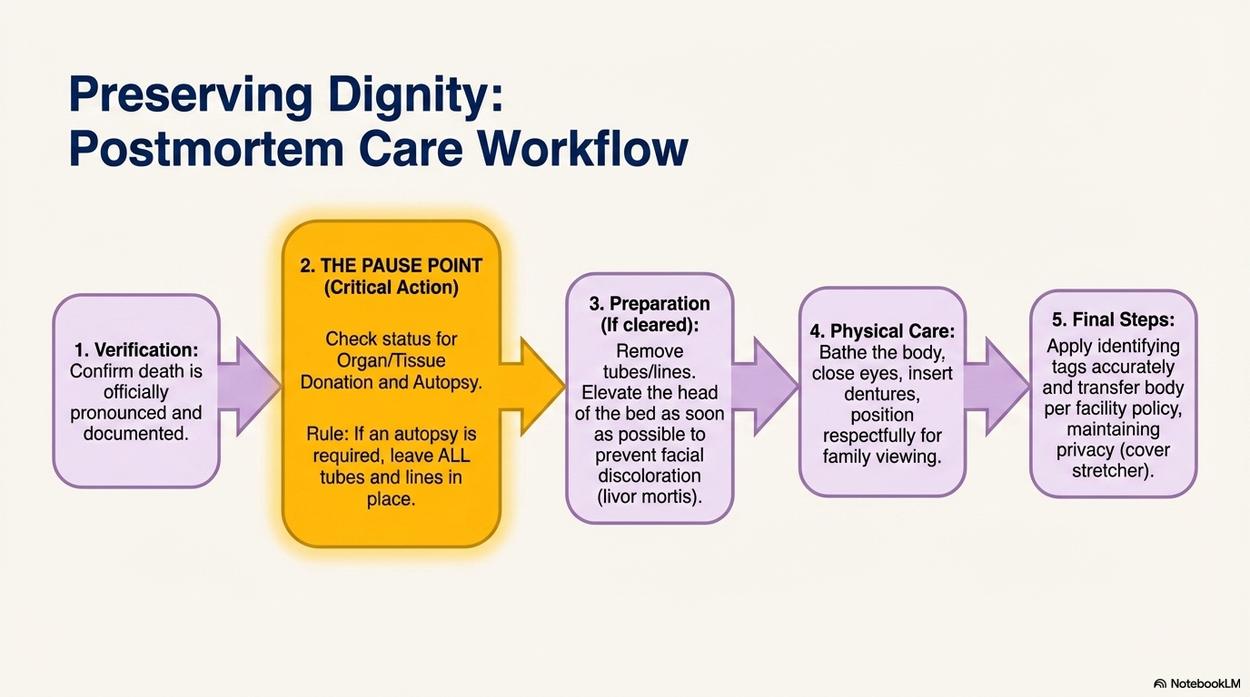
Verify death, pause for donation/autopsy (leave lines), remove tubes, HOB up for livor mortis, bathe, tag.
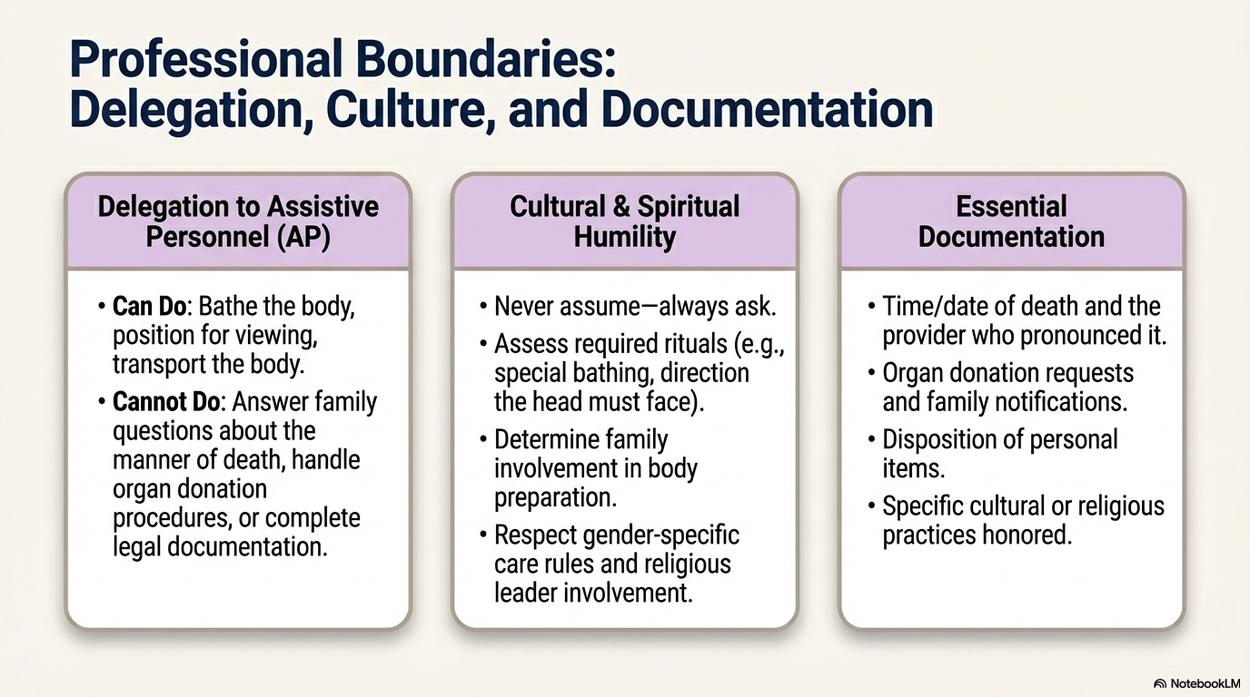
What AP can/cannot do after death, cultural and gender-specific ritual questions, what must be charted.
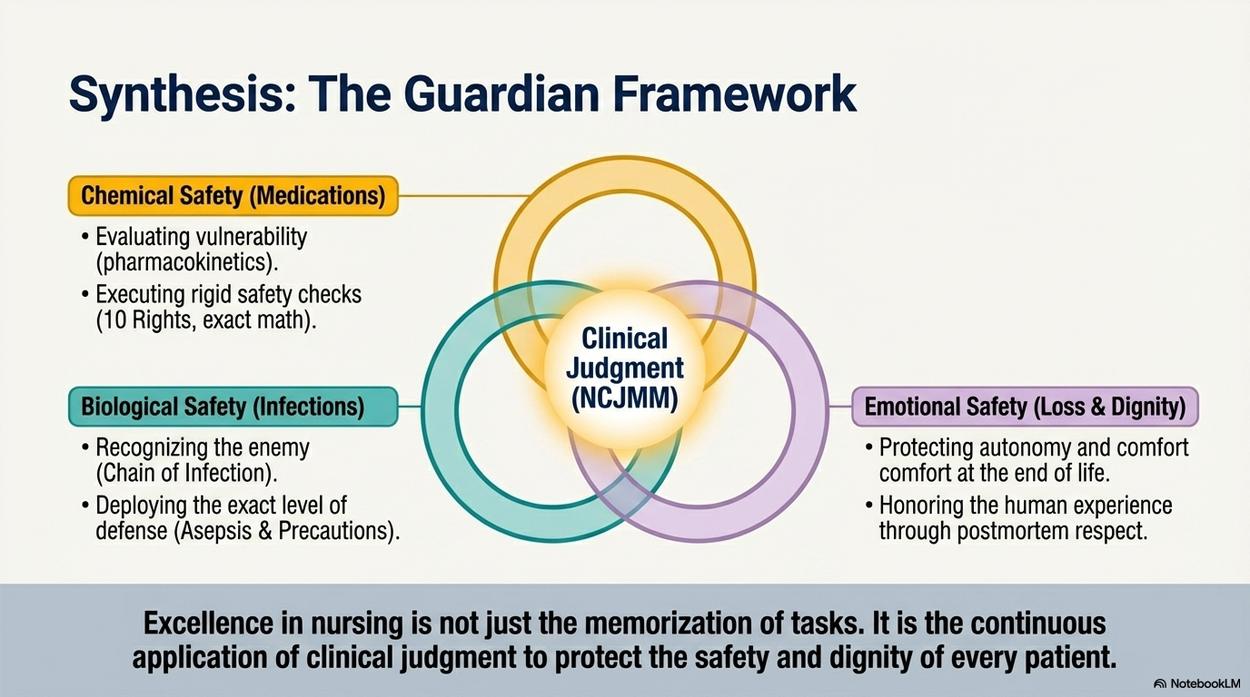
Summary slide tying chemical, biological, and emotional safety together through NCJMM clinical judgment.
Safety, sensory, stoma & end-of-life hygiene
Title slide: NUR 125 master study guide for safety, skin integrity, and hygiene.
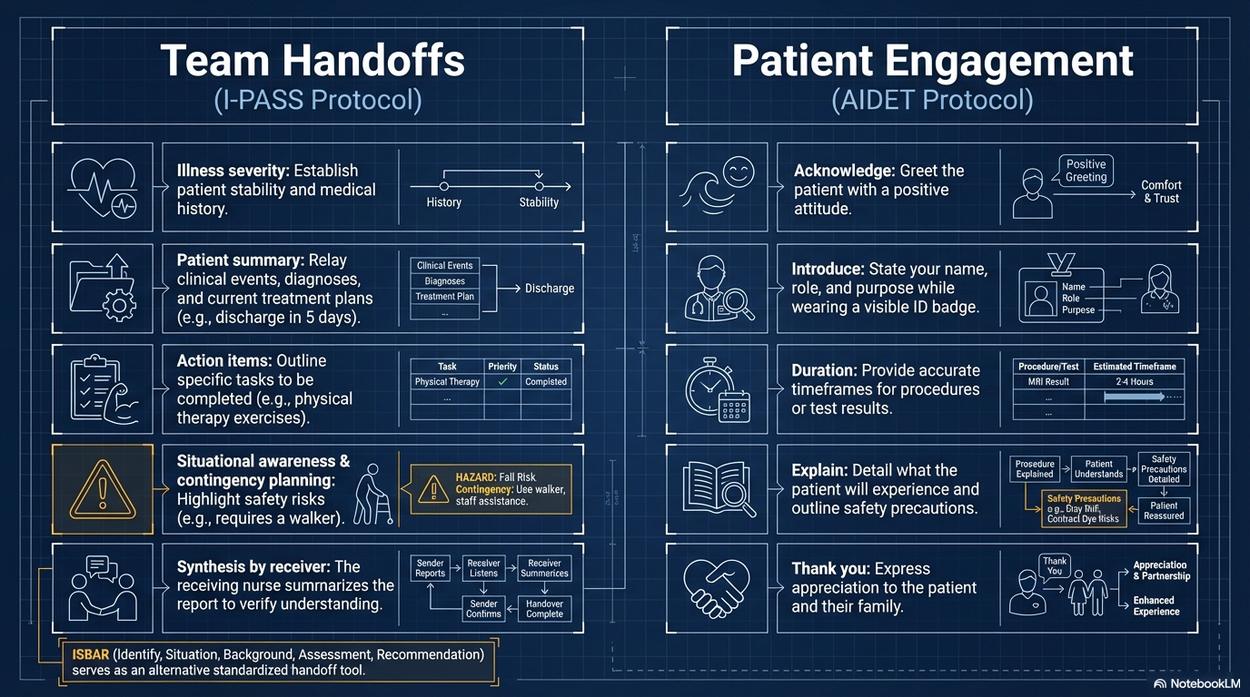
I-PASS illness severity, patient summary, action items, situational awareness, synthesis; AIDET and ISBAR.
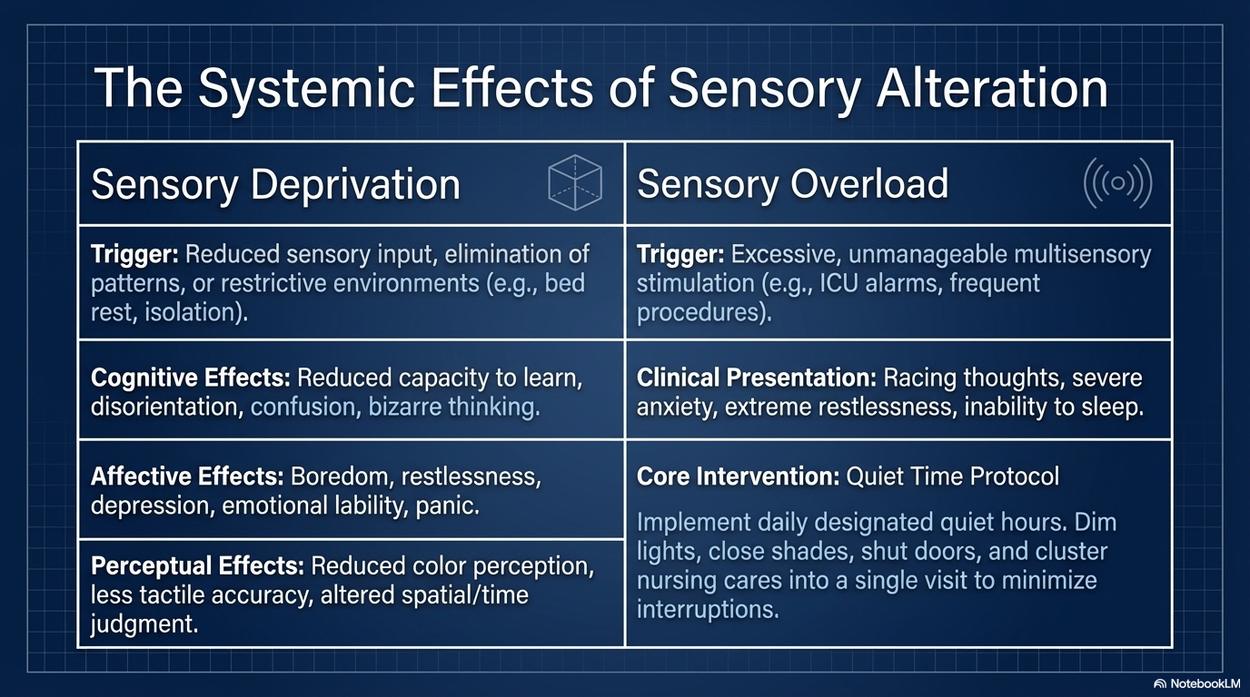
Deprivation (cognitive, affective, perceptual) vs overload (racing thoughts); Quiet Time protocol.
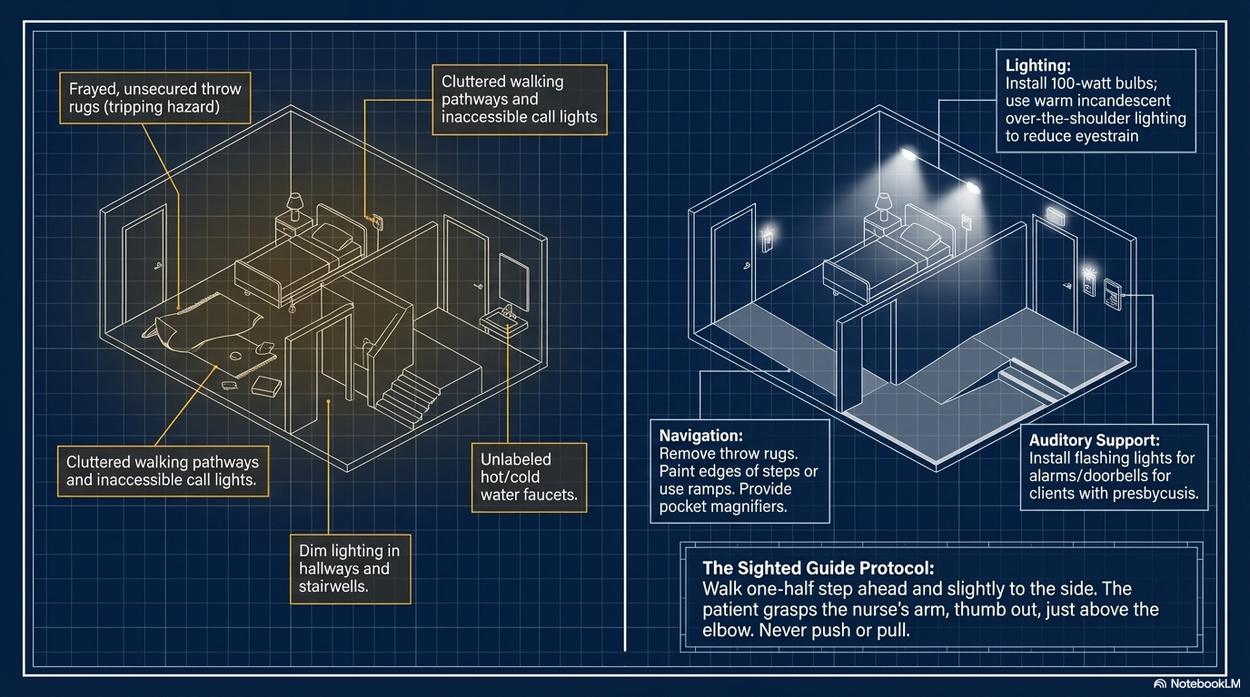
Throw rugs, dim lighting, unlabeled faucets; 100-watt warm bulbs, flashing alarms, sighted guide technique.
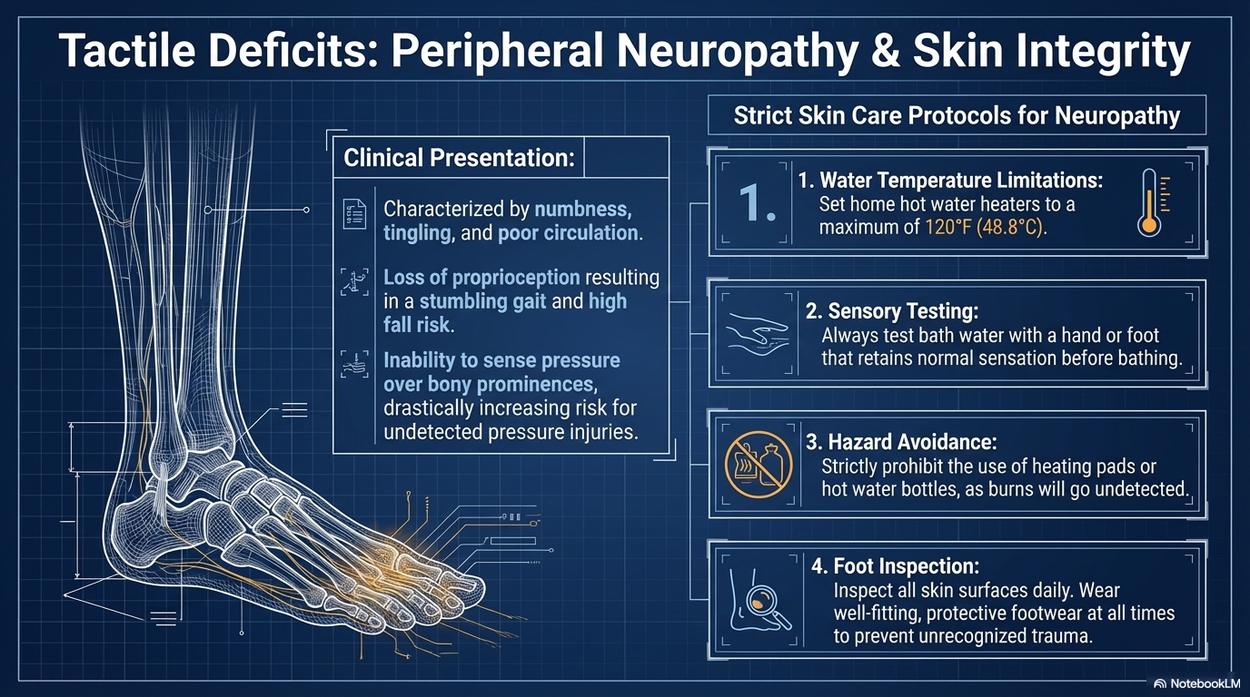
Numbness, lost proprioception, undetected pressure injury; 120 F water max, no heating pads, daily foot inspection.
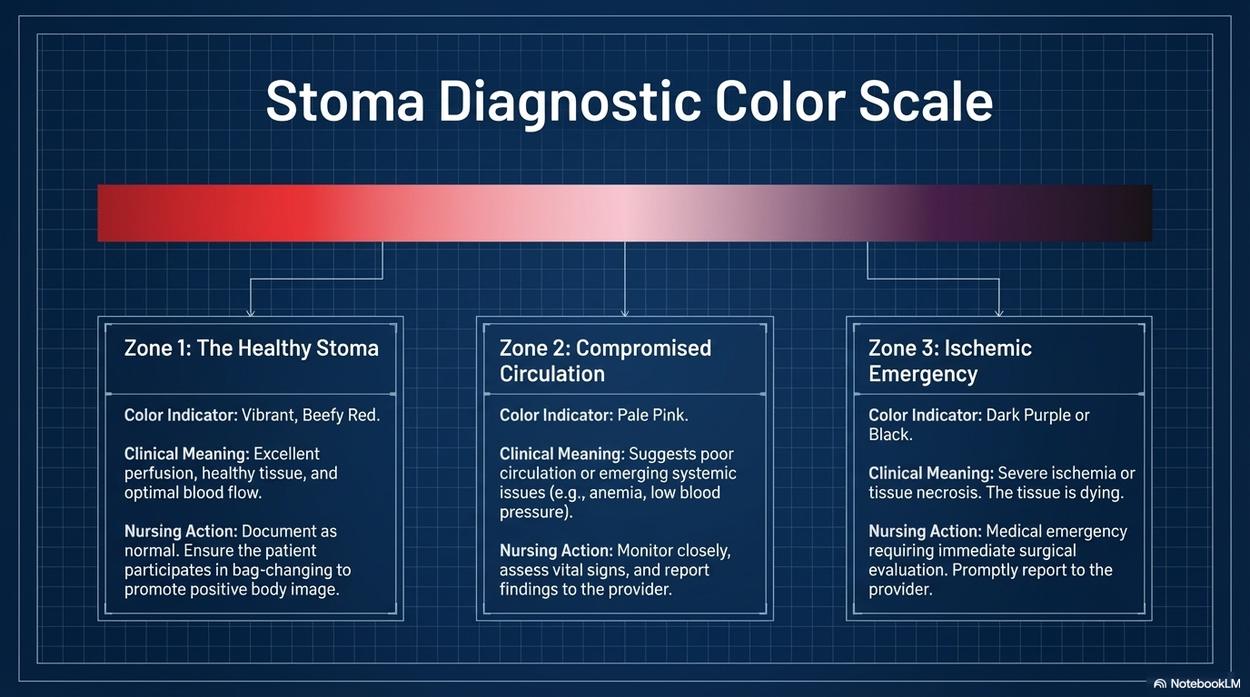
Beefy red = healthy, pale pink = poor perfusion/anemia, dark purple or black = ischemic surgical emergency.
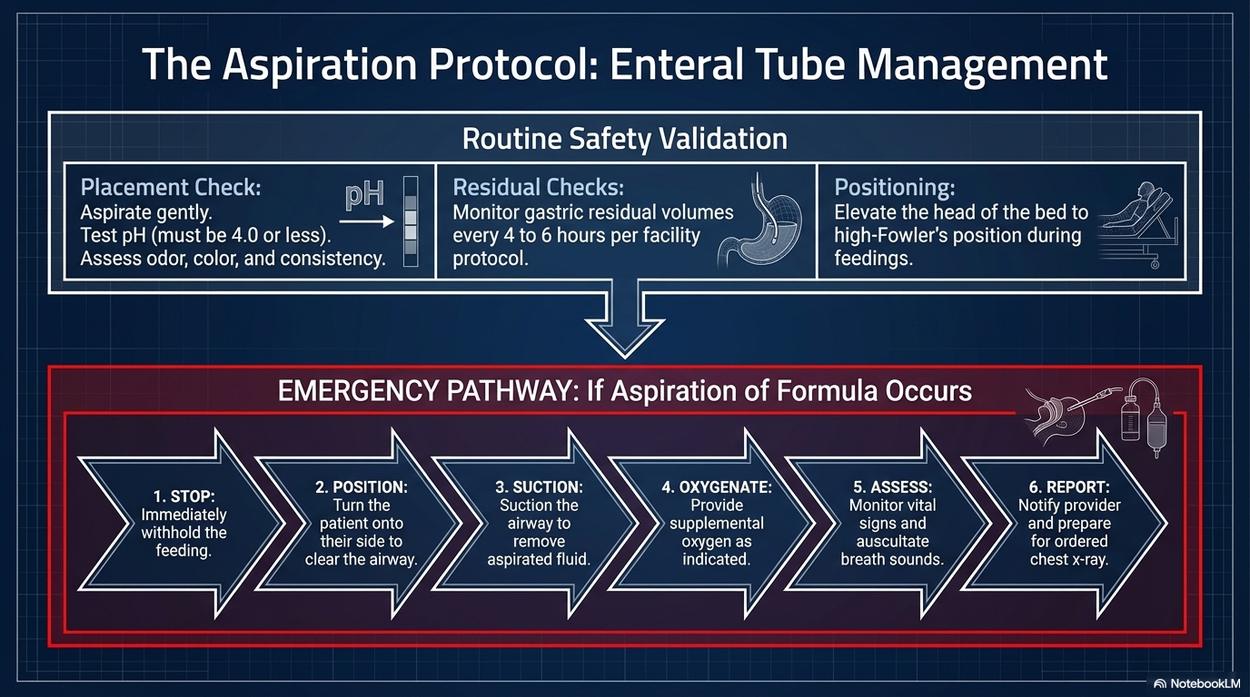
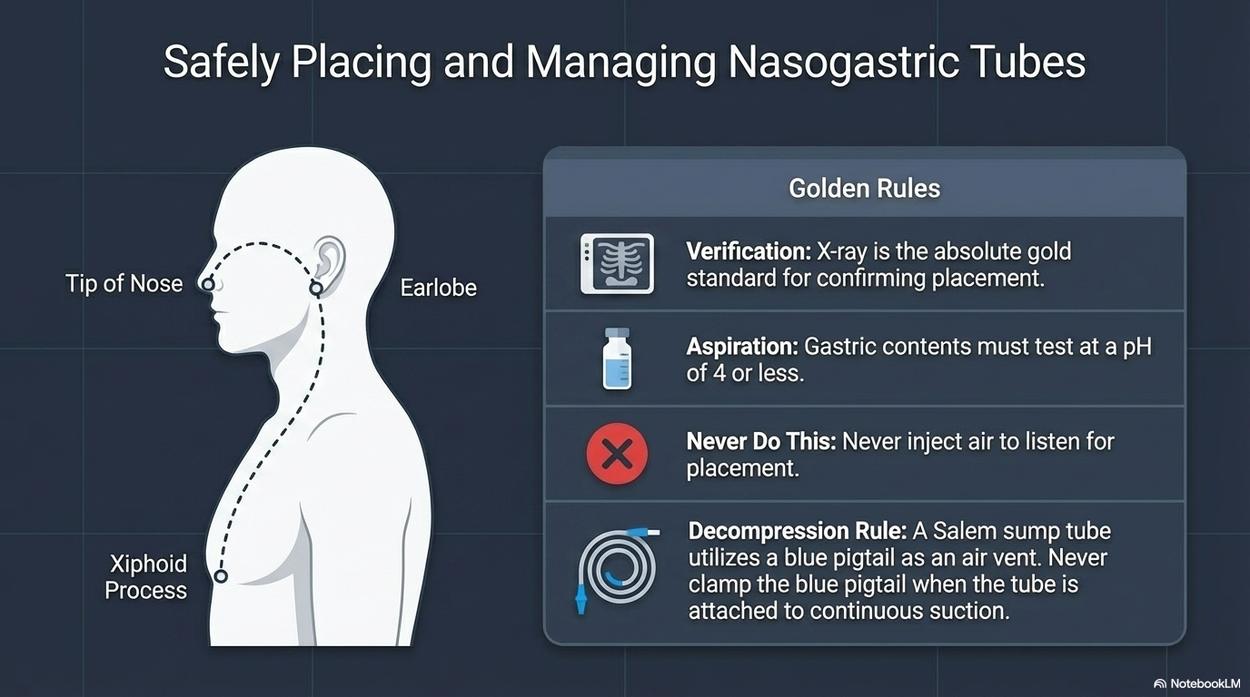
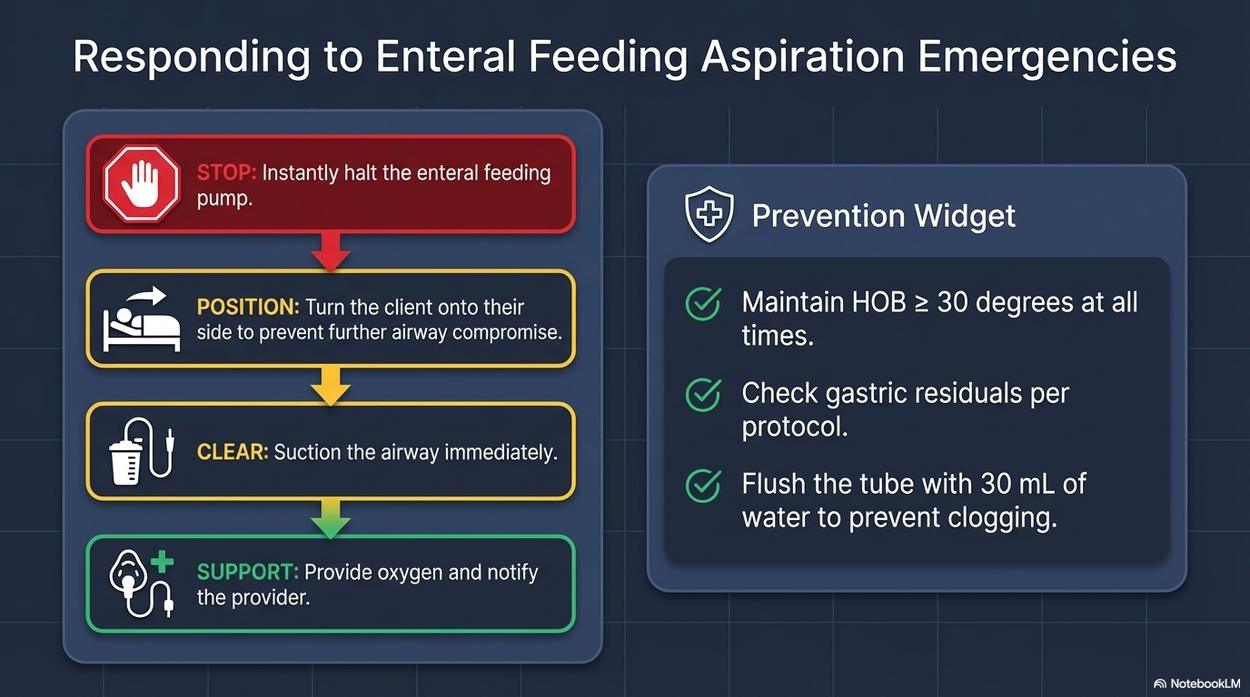
pH 4.0 or less check, residuals q4-6h, high-Fowler's; then stop, side-lying, suction, oxygenate, report.
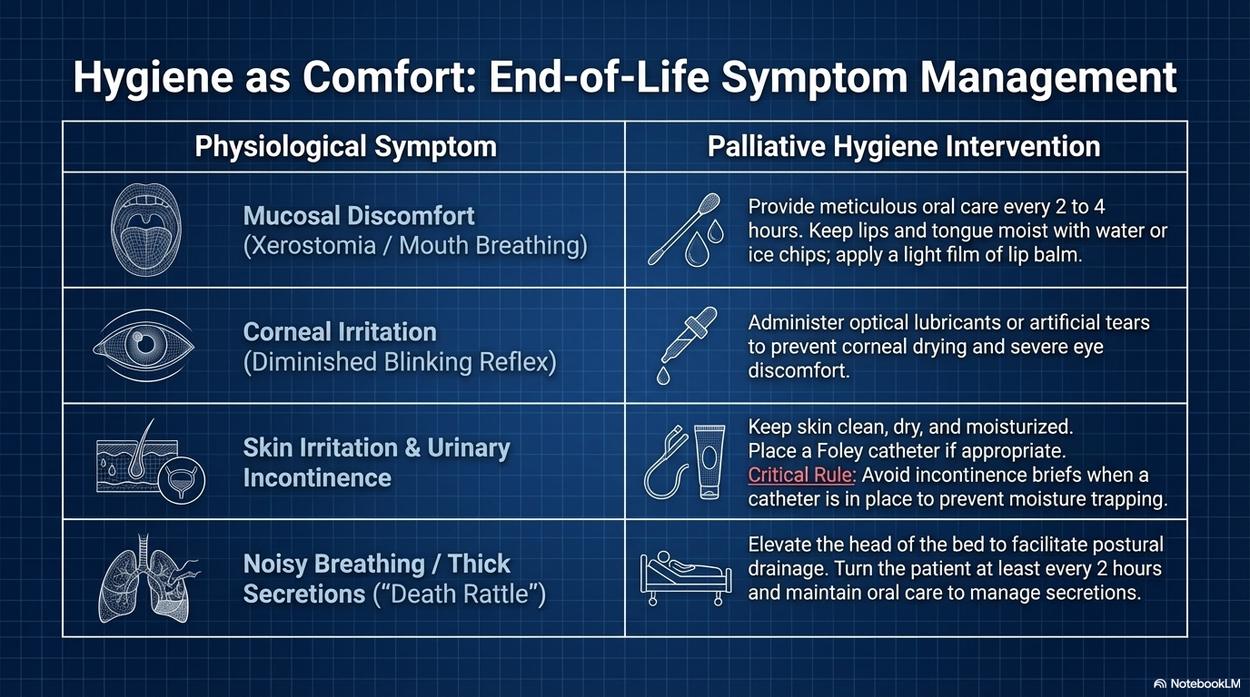
Xerostomia oral care q2-4h, artificial tears, no briefs over a Foley, HOB up and turn q2h for death rattle.
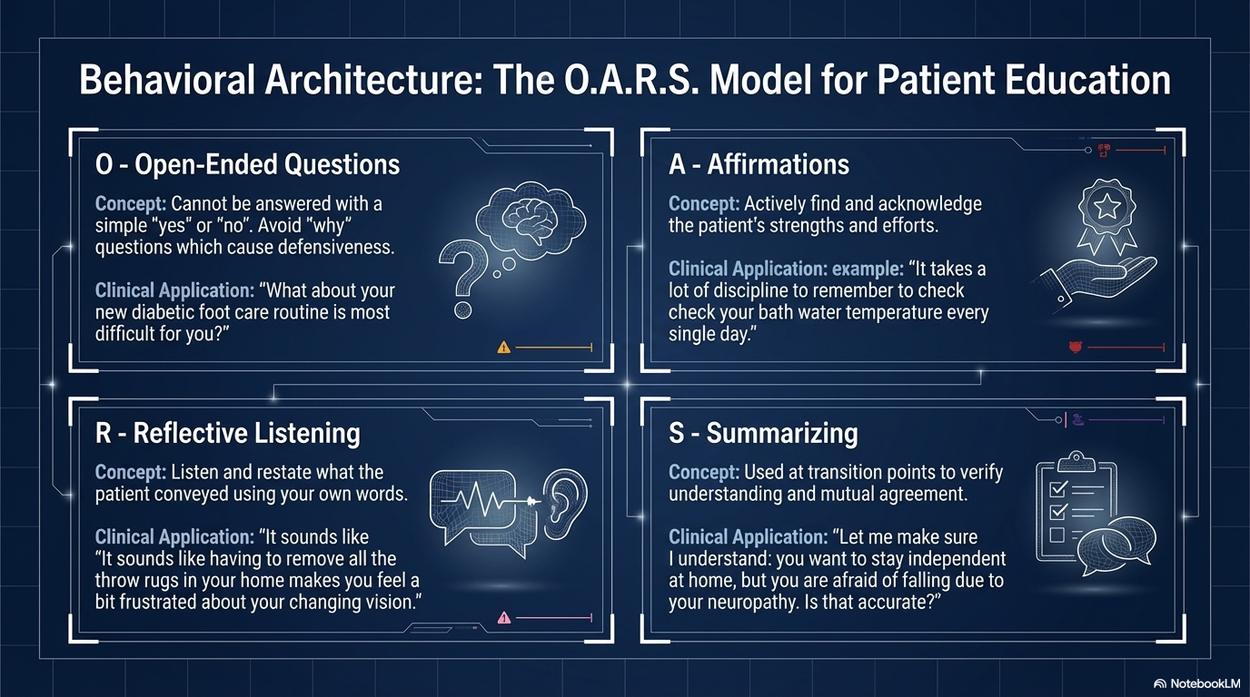
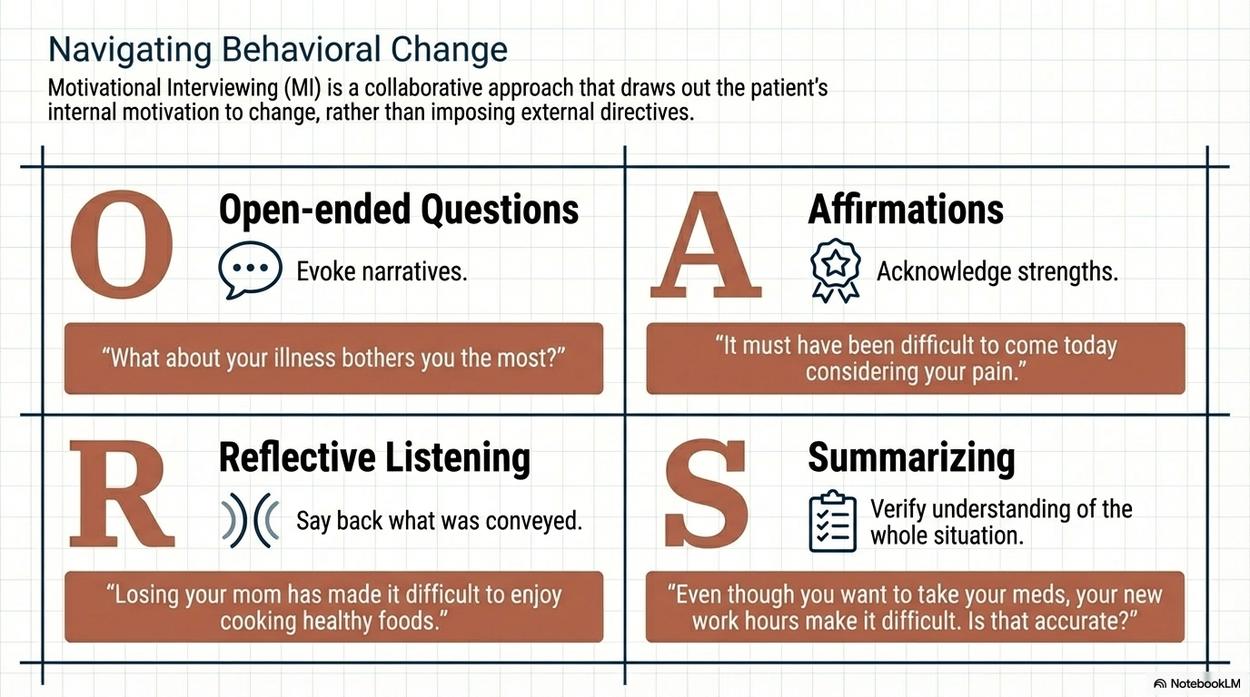
Open-ended questions, affirmations, reflective listening, summarizing with diabetic foot care examples.
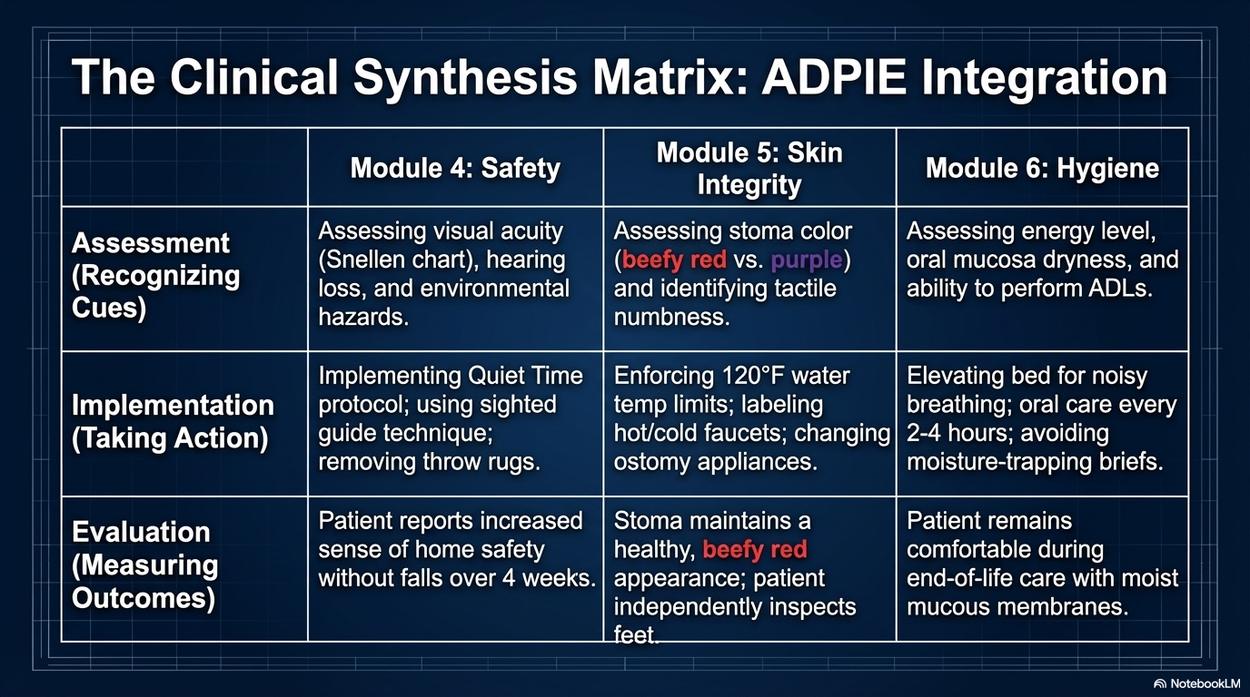
Summary grid of assessment, implementation, and evaluation across Module 4 safety, 5 skin integrity, and 6 hygiene.
Therapeutic communication & patient education
Title slide: clinical blueprint for therapeutic communication and patient education.
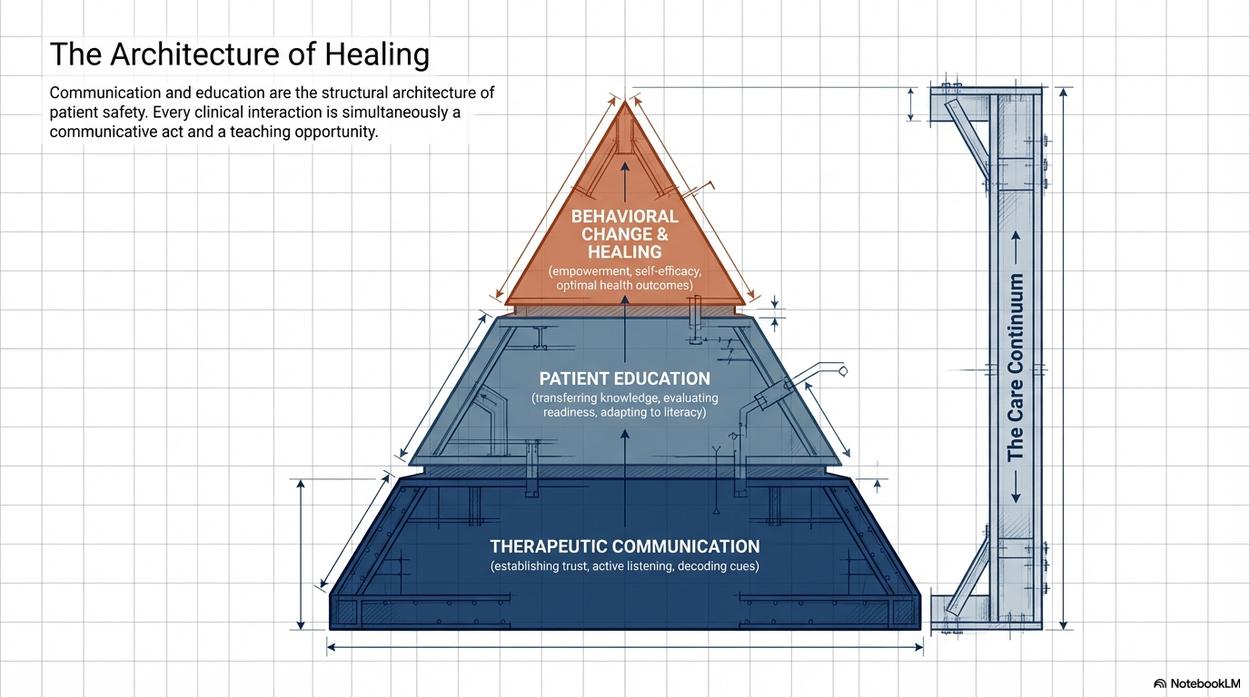
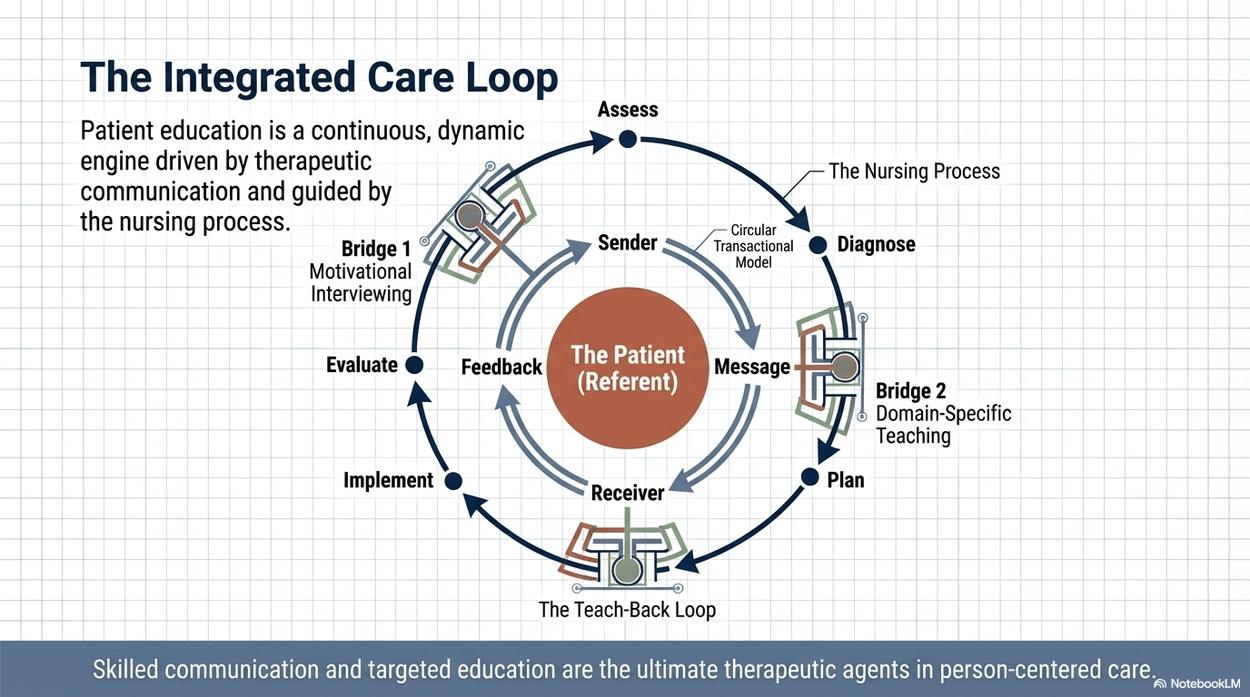
Three-tier pyramid: therapeutic communication as base, patient education, then behavioral change and healing.
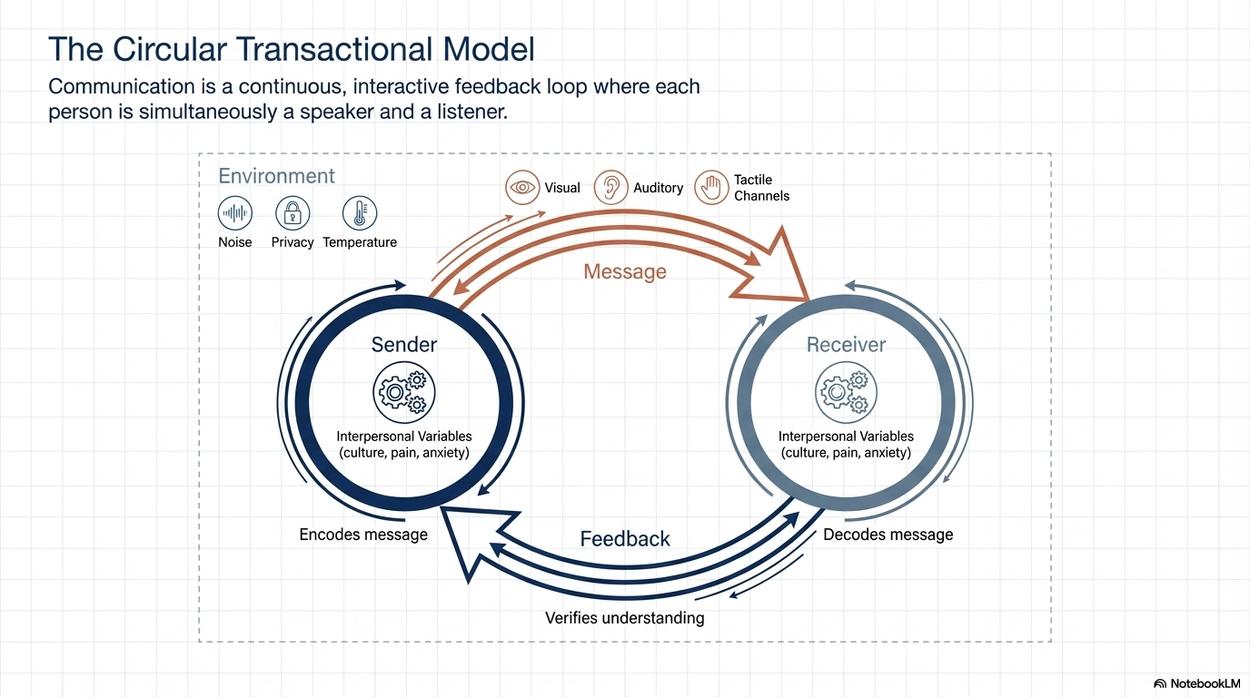
Sender encodes, receiver decodes, feedback loop; visual/auditory/tactile channels, environment, variables.
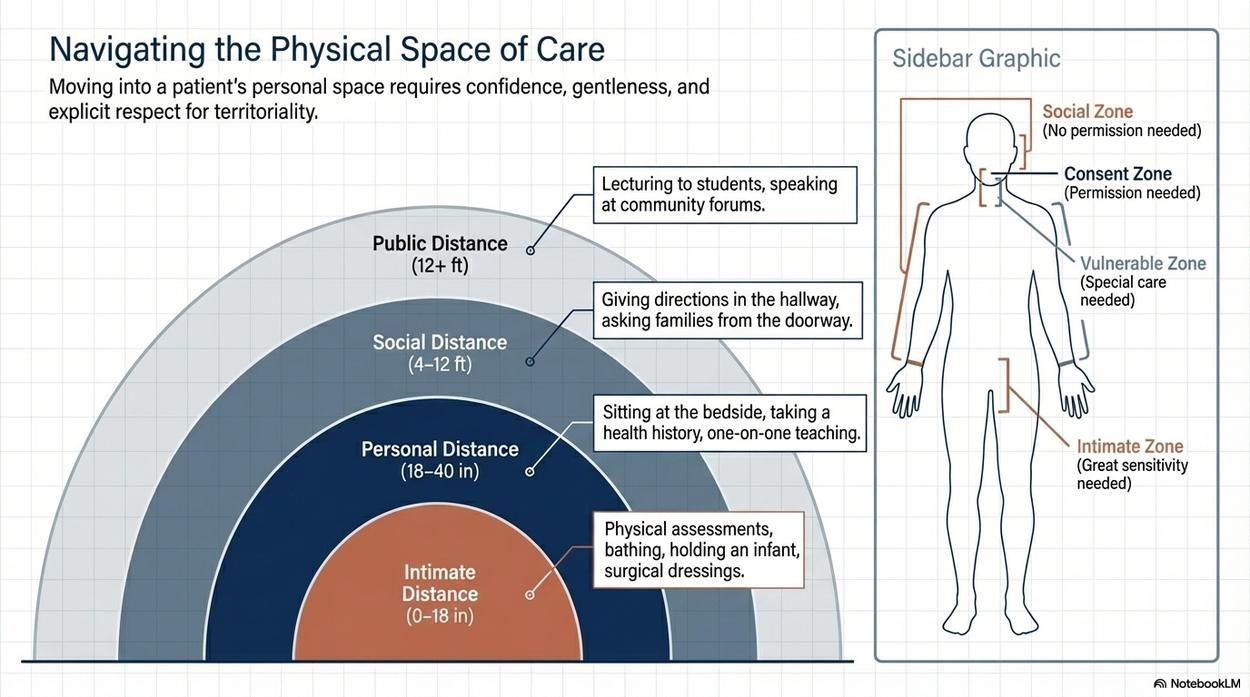
Intimate 0-18 in, personal 18-40 in, social 4-12 ft, public 12+ ft; consent, vulnerable, and intimate body zones.
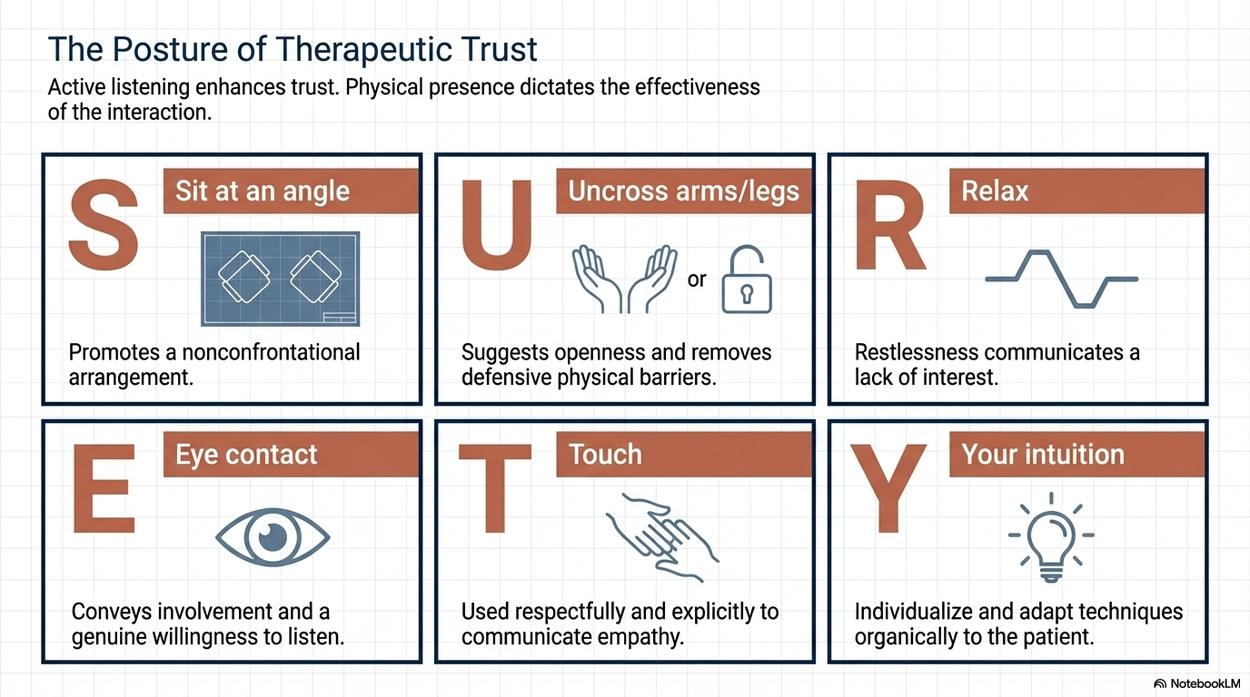
Sit at an angle, Uncross arms/legs, Relax, Eye contact, Touch, Your intuition.
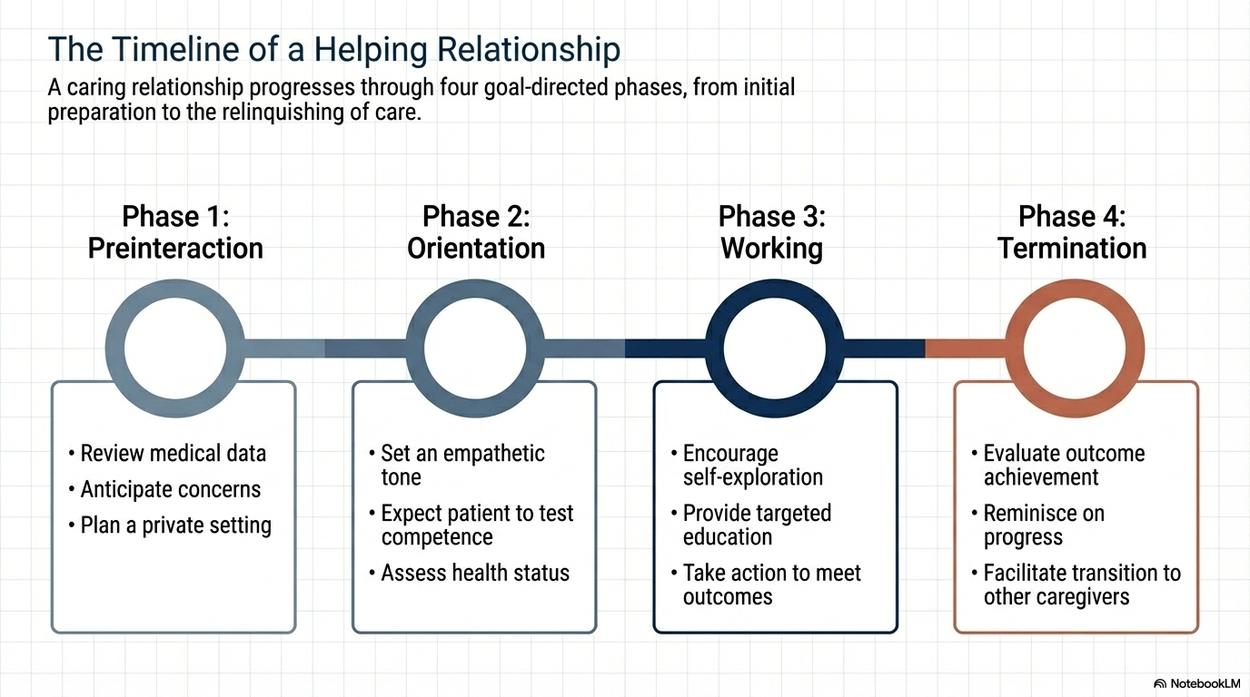
Preinteraction, Orientation, Working, Termination phases with nurse tasks for each.
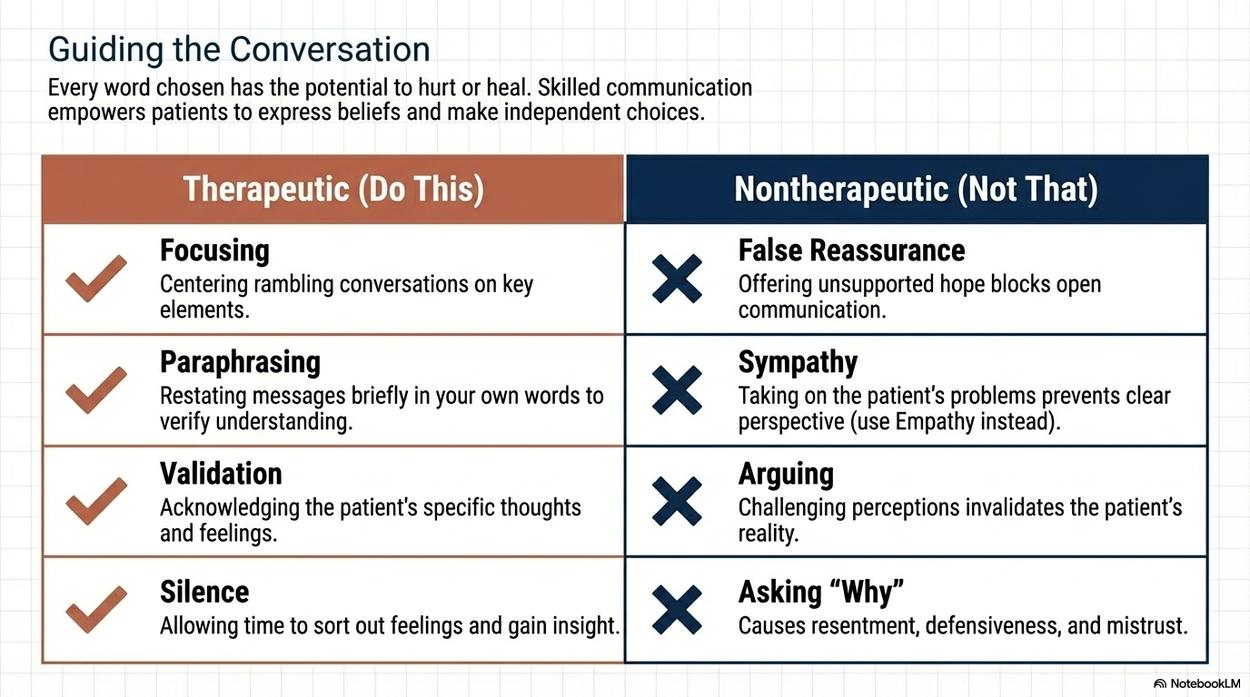
Therapeutic focusing, paraphrasing, validation, silence vs false reassurance, sympathy, arguing, asking 'why'.
Motivational interviewing: open-ended questions, affirmations, reflective listening, summarizing scripts.
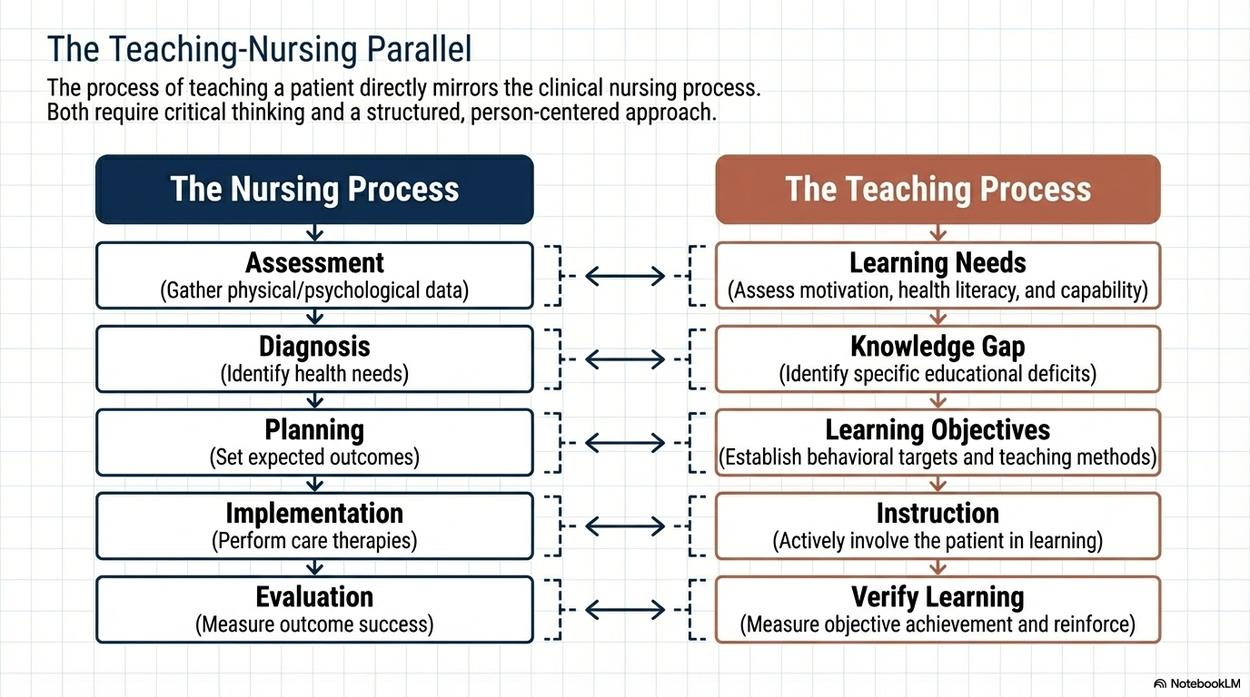
ADPIE steps aligned to learning needs, knowledge gap, learning objectives, instruction, verify learning.
Readiness (grief stage, motivation, comfort), ability (development, cognition), environment (literacy).
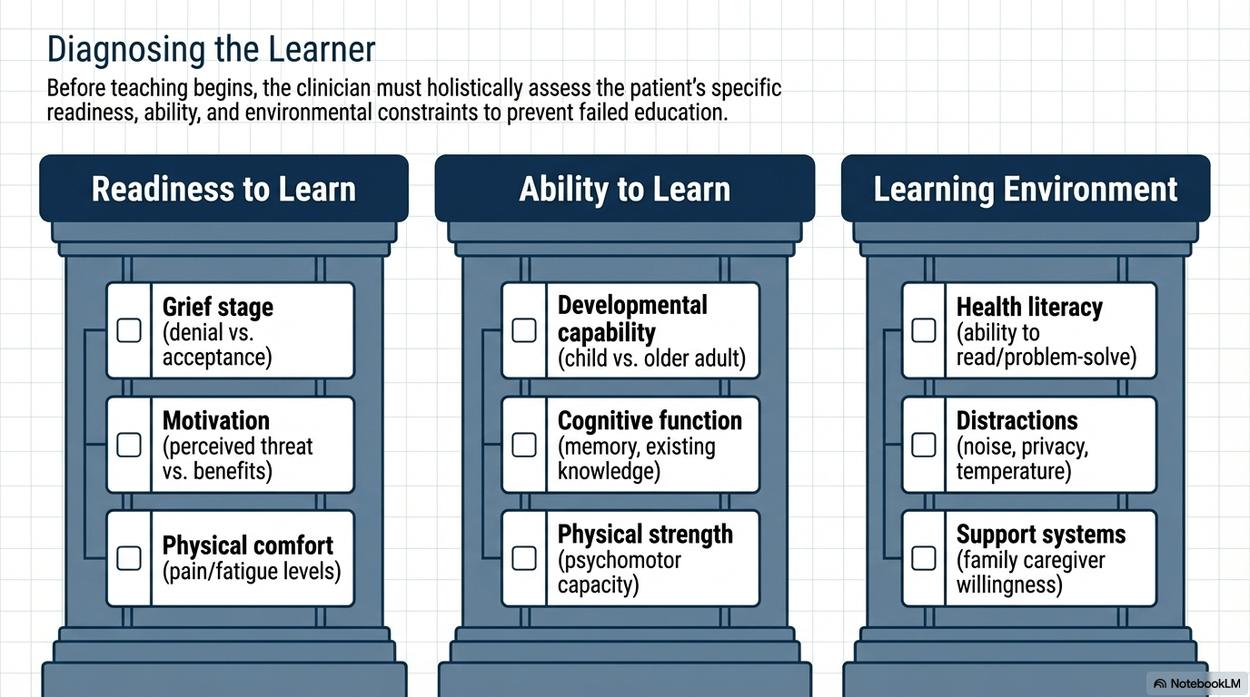
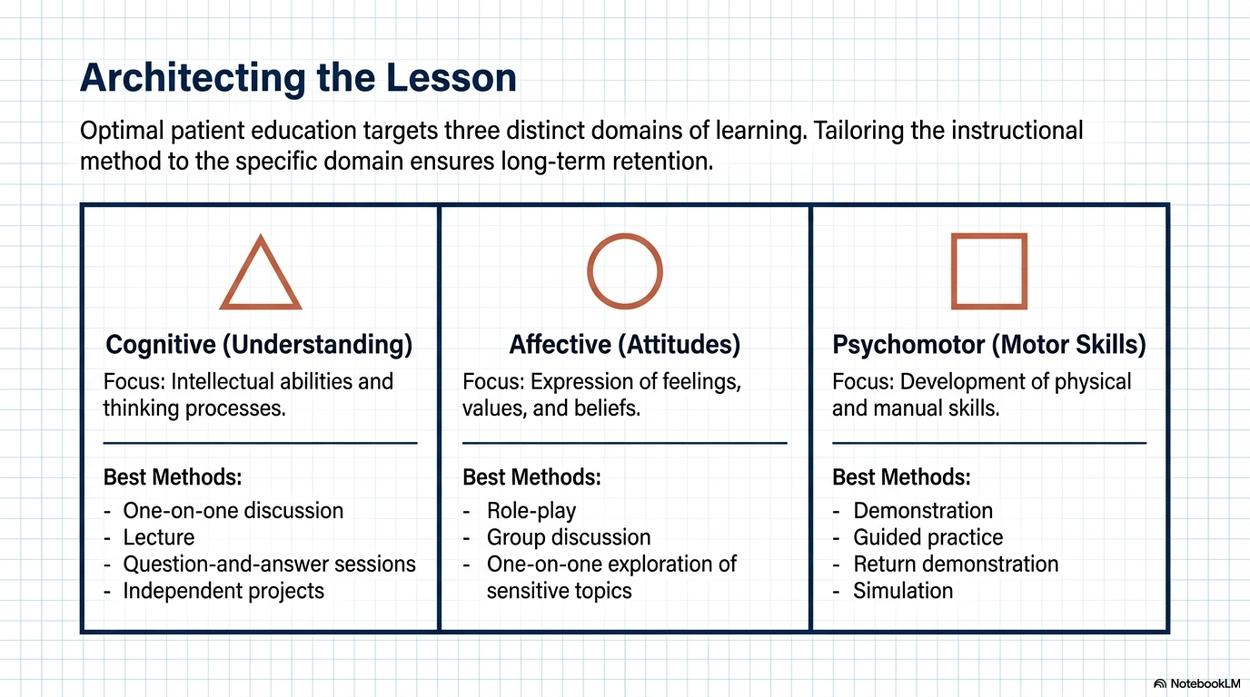
Cognitive, affective, psychomotor domains with methods: lecture, role-play, return demonstration.
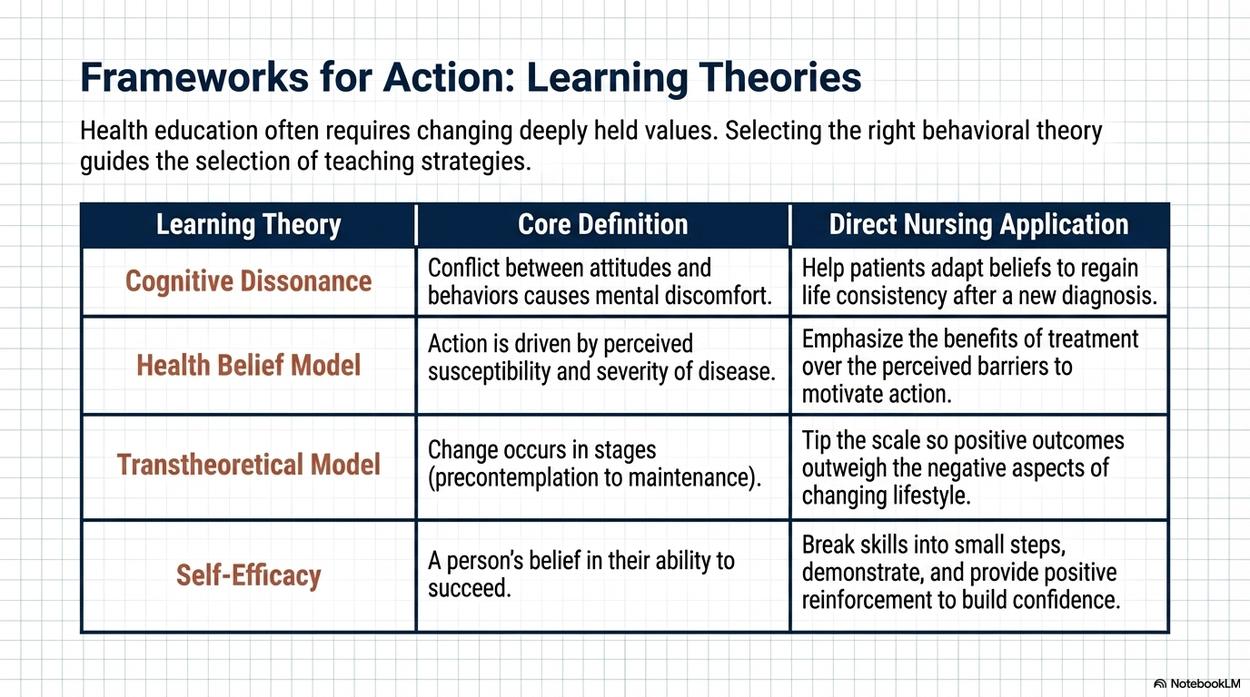
Cognitive Dissonance, Health Belief Model, Transtheoretical stages, Self-Efficacy with nursing applications.
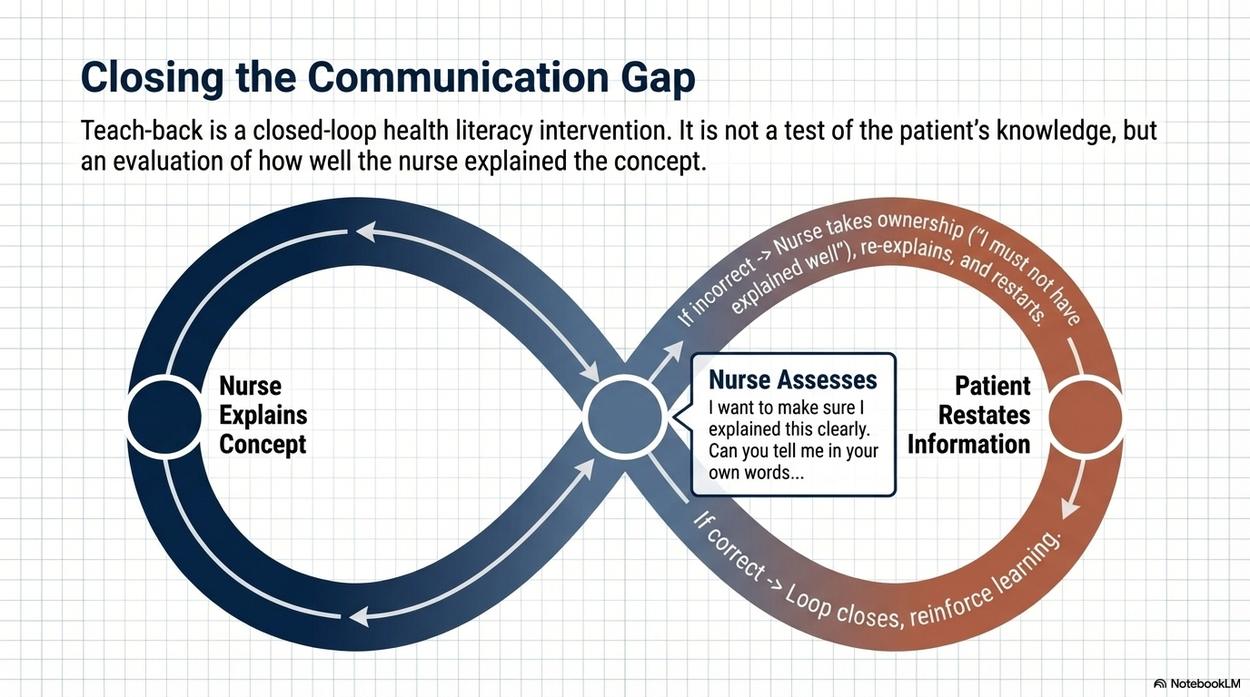
Closed-loop teach-back: patient restates, nurse owns the gap and re-explains rather than testing them.
Summary slide merging the nursing process, transactional model, MI bridge, domain teaching, and teach-back loop.
Oxygenation, elimination & nutrition
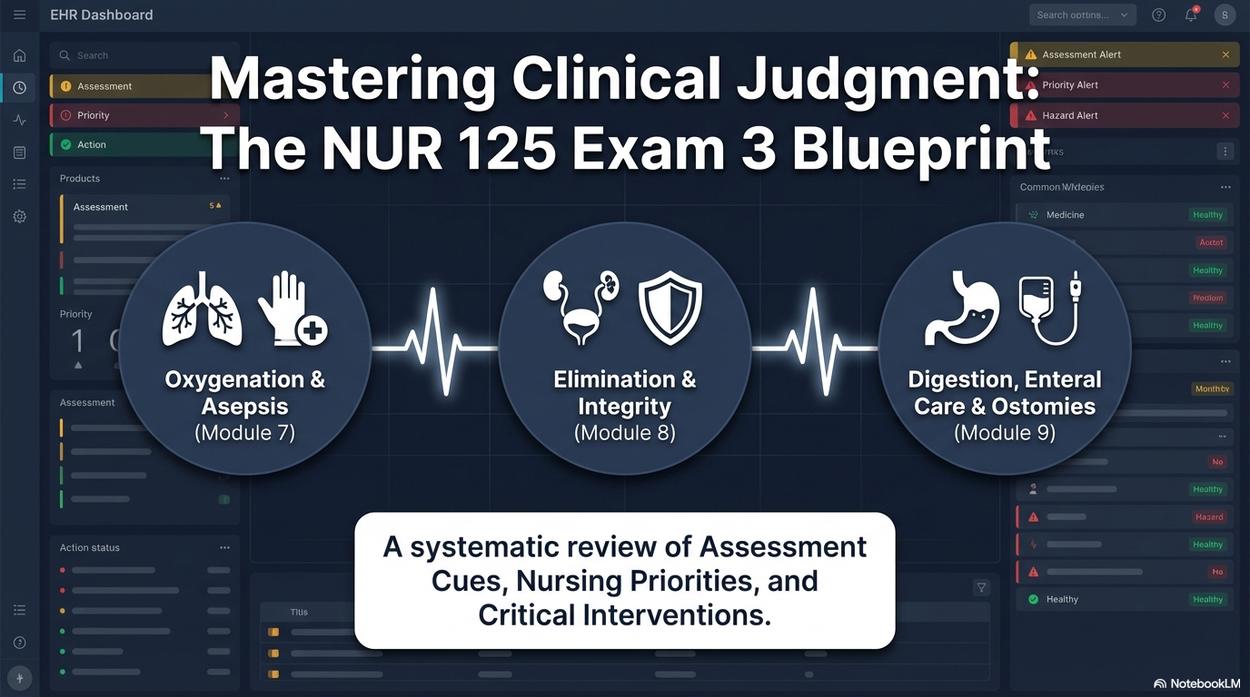
Title slide: Modules 7-9 roadmap - Oxygenation & Asepsis, Elimination & Integrity, Digestion/Enteral/Ostomies.
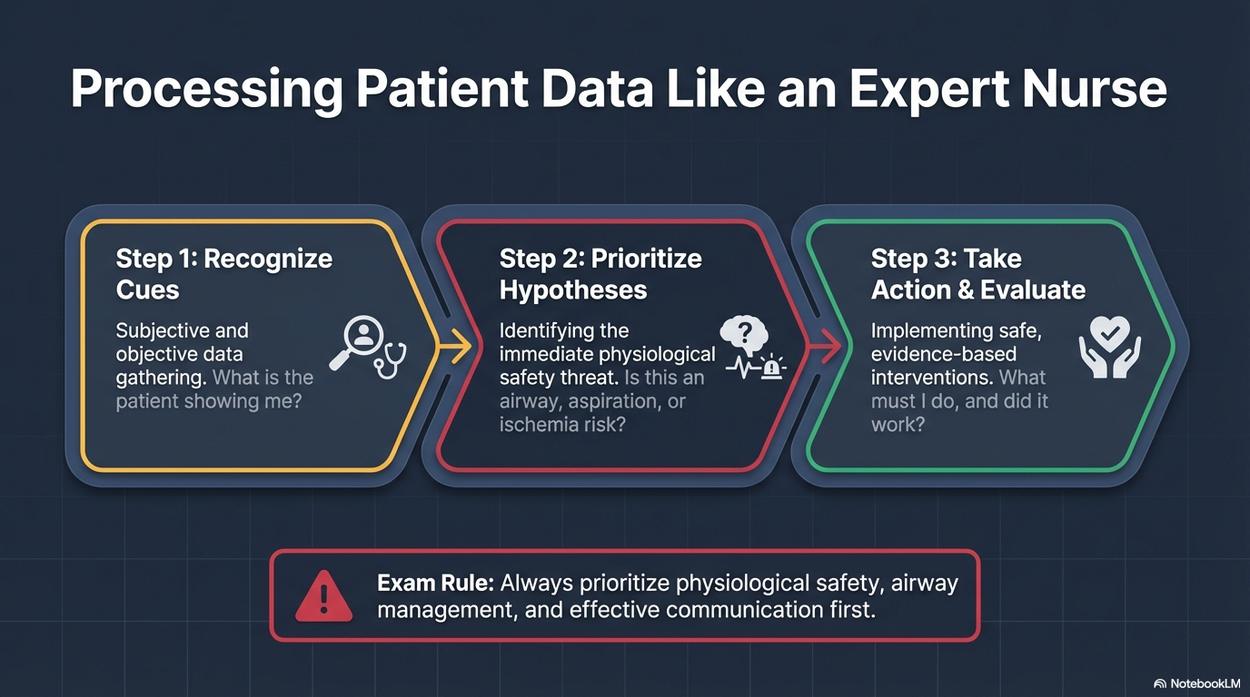
3 steps: Recognize Cues, Prioritize Hypotheses, Take Action & Evaluate; exam rule - airway and safety first.
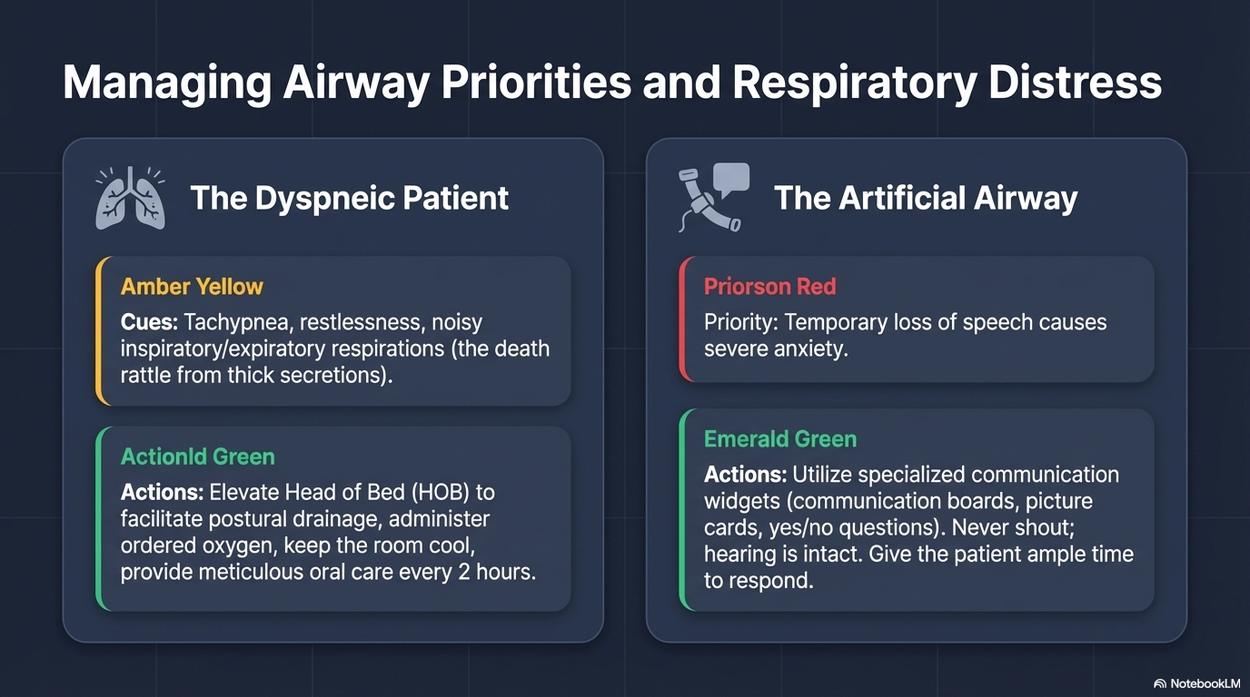
Dyspnea cues (tachypnea, death rattle) vs artificial airway: raise HOB, oral care q2h, communication boards.
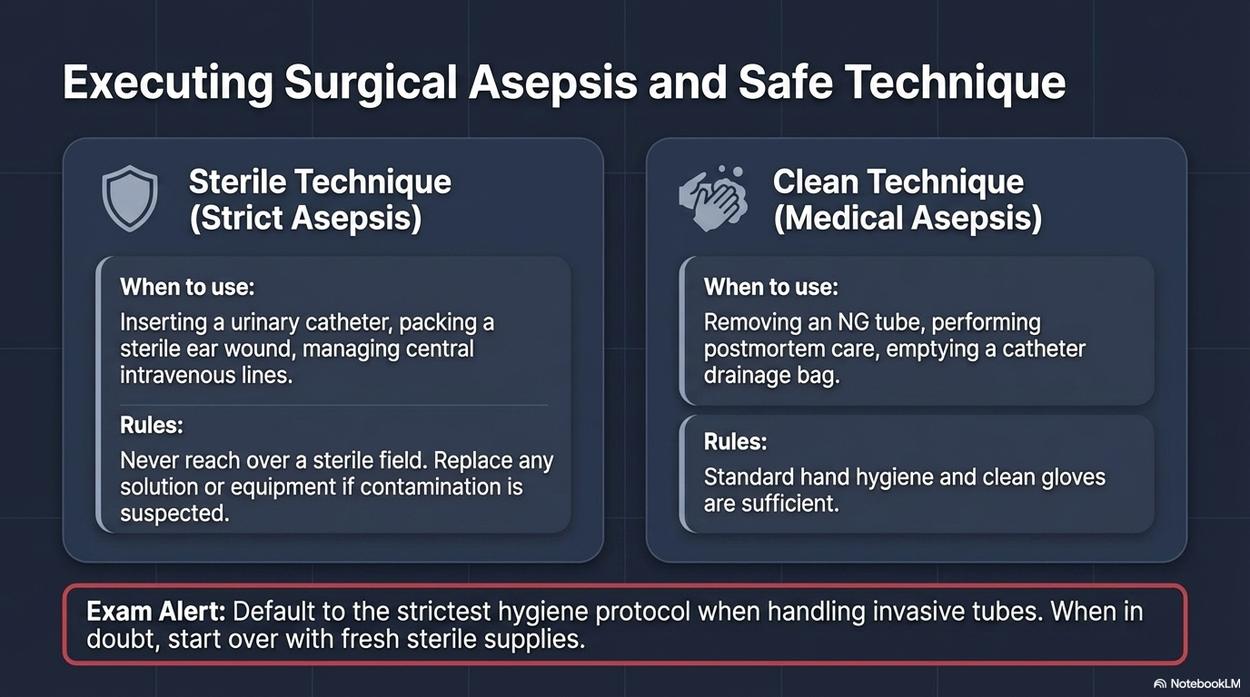
Sterile (Foley insertion, central lines, packing) vs clean (NG removal, postmortem care, emptying drainage bag).
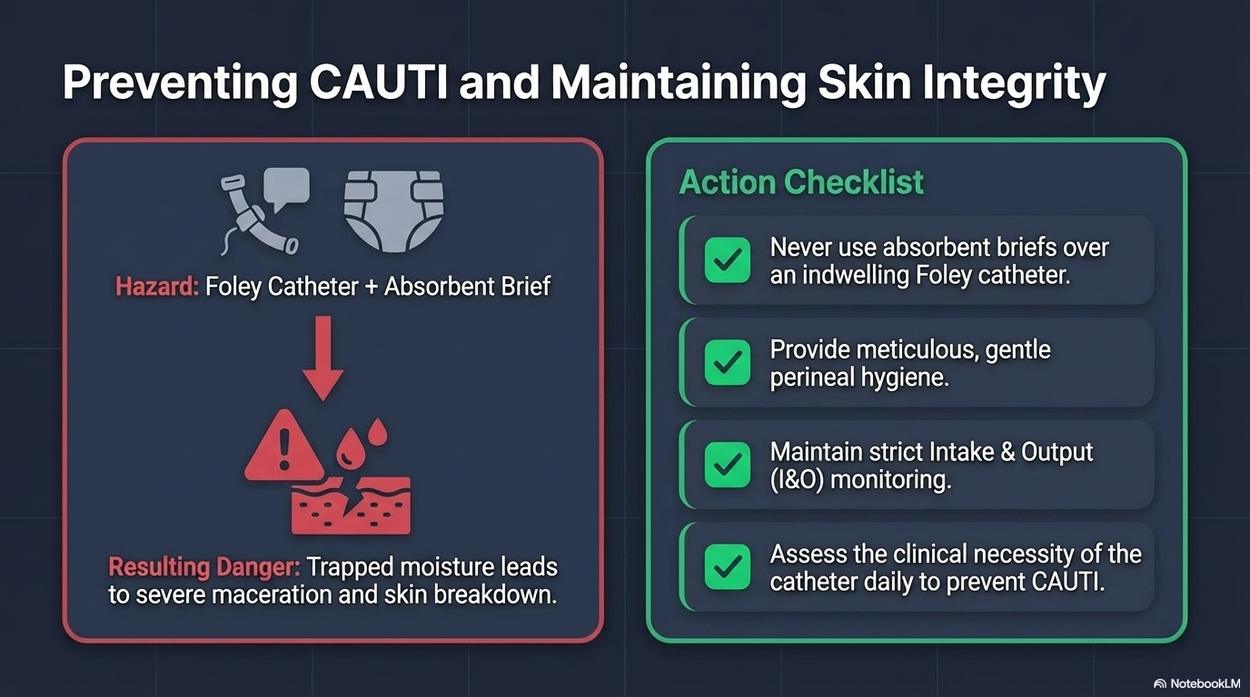
Never brief over an indwelling Foley (maceration); perineal hygiene, strict I&O, daily catheter necessity check.
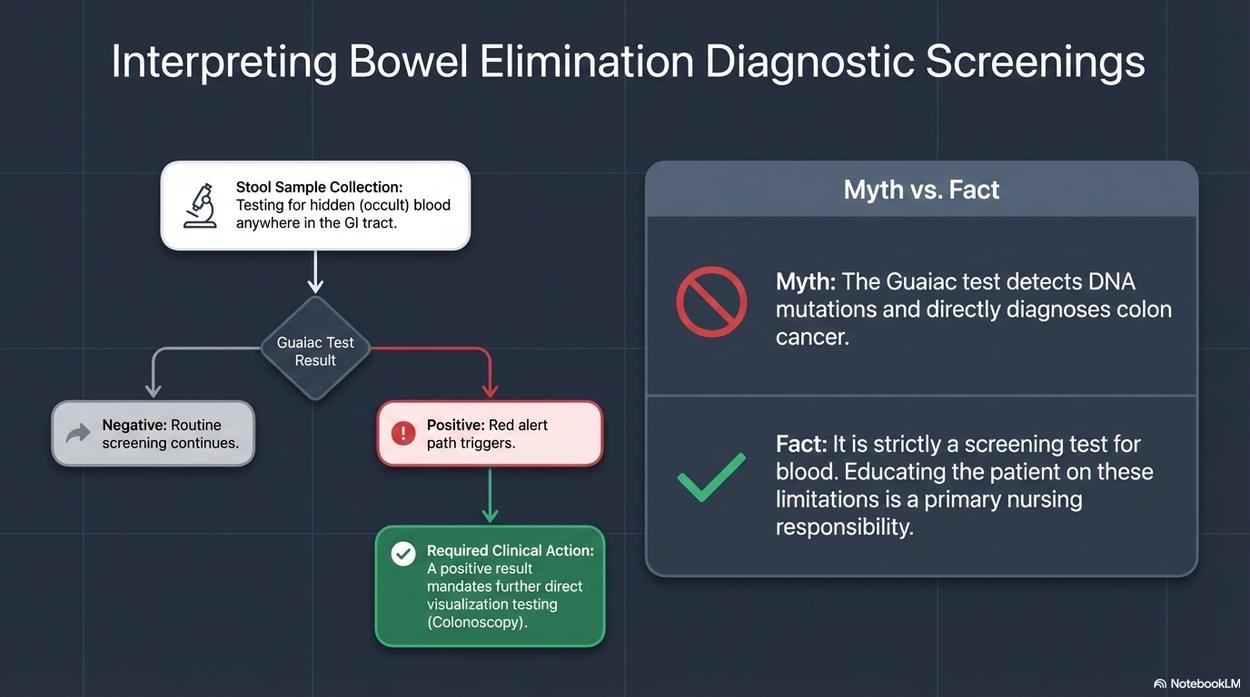
Guaiac stool test detects occult blood only, not DNA/cancer; a positive result mandates colonoscopy follow-up.
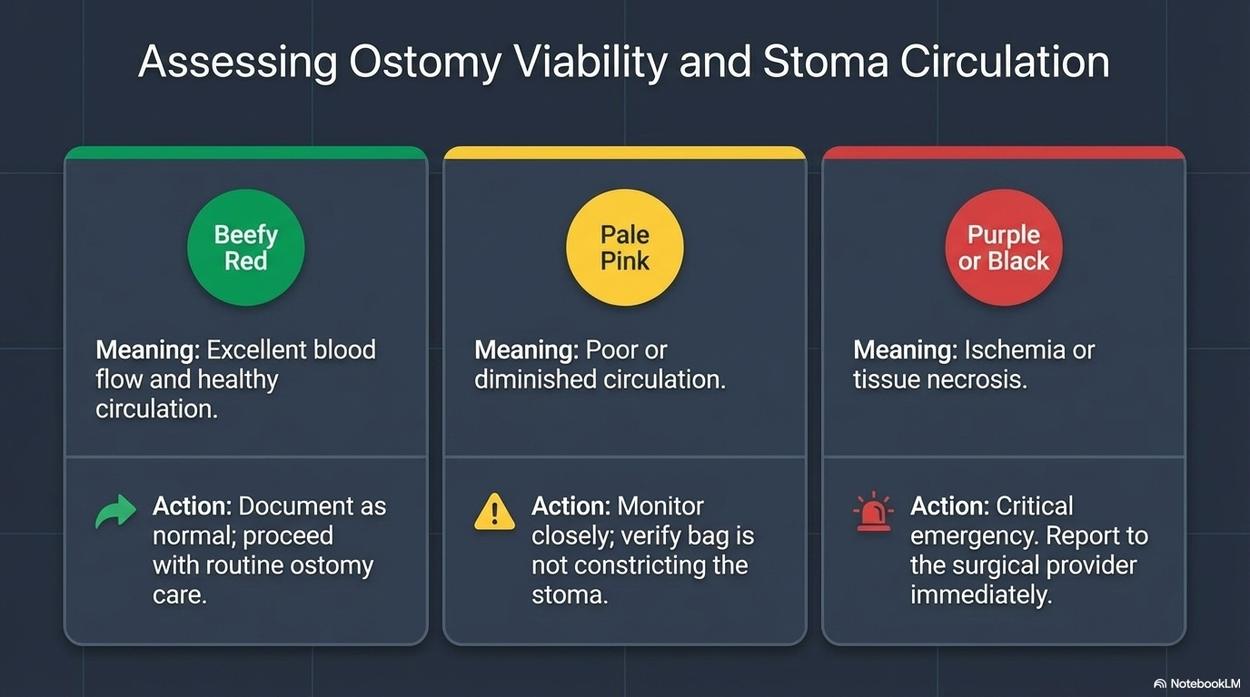
Stoma colors: beefy red = healthy, pale pink = poor perfusion (check bag), purple/black = necrosis, report STAT.
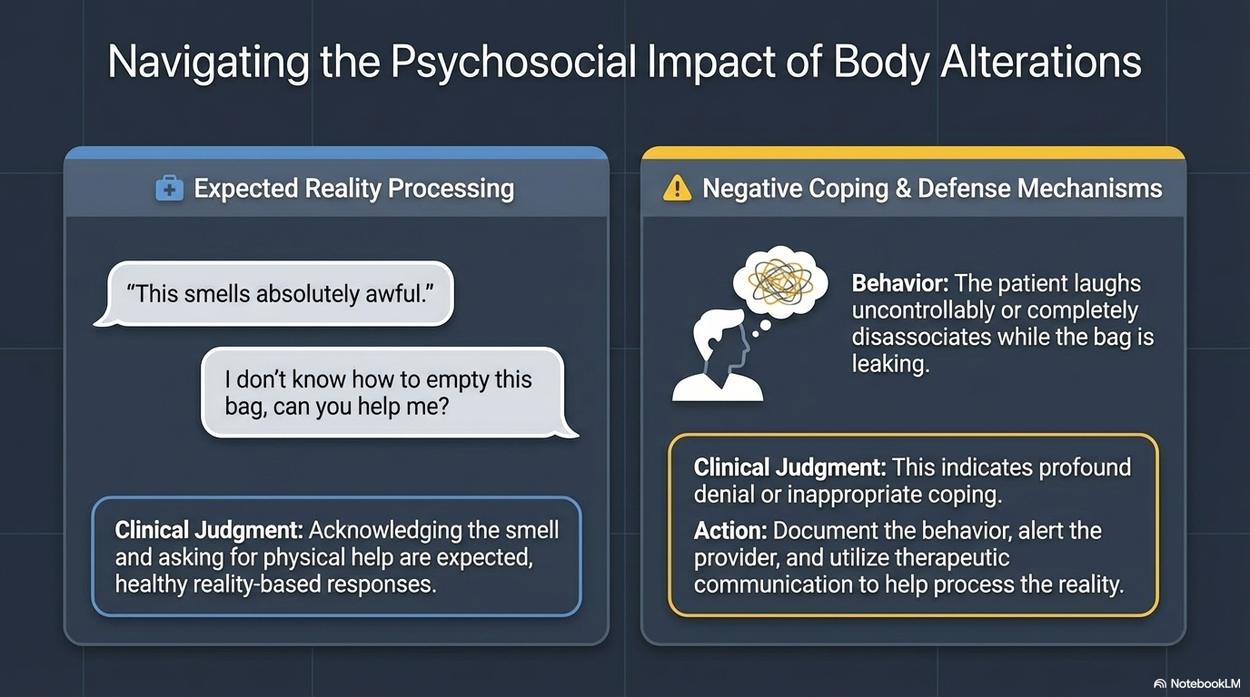
Normal reality processing ("this smells awful") vs denial cues - uncontrollable laughter or disassociation.
NEX measuring; X-ray is gold standard, gastric pH 4 or less, never auscultate air, never clamp Salem pigtail.
Stop pump, side-lying, suction, oxygen/notify; prevent with HOB 30+ degrees, residual checks, 30 mL water flush.
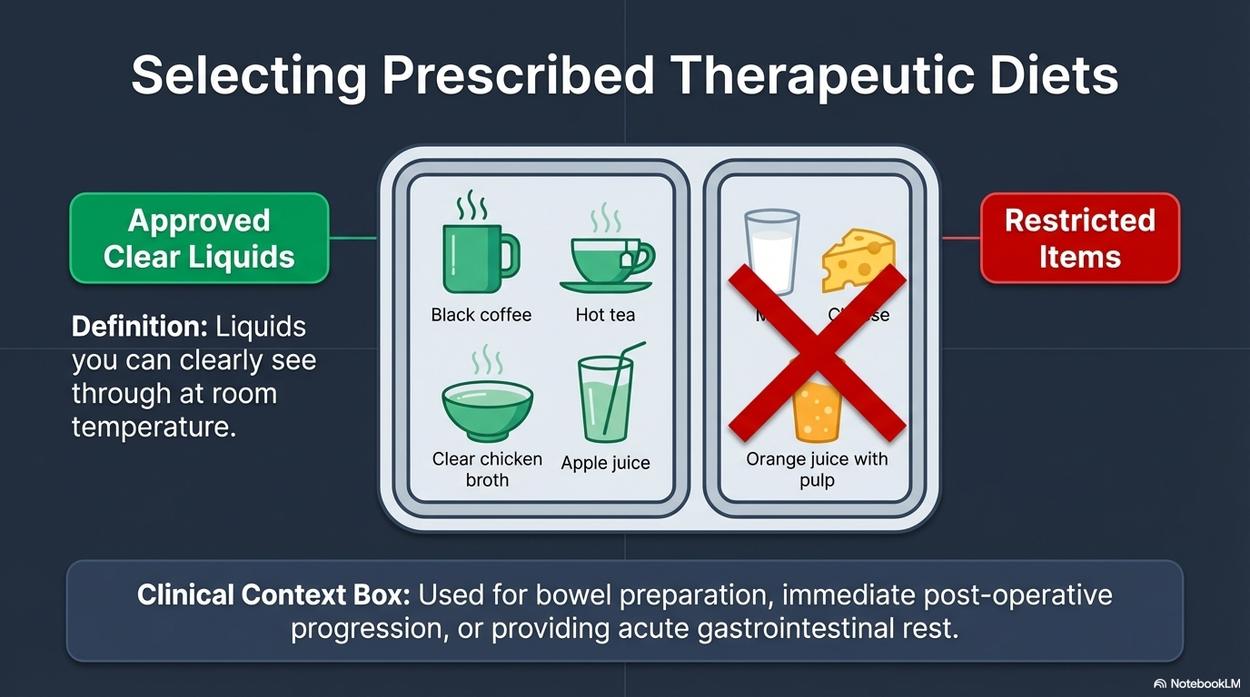
Clear liquids (black coffee, tea, broth, apple juice) vs banned milk, cheese, pulpy OJ; for bowel prep/post-op.
Overload (ICU alarms, lights) - quiet time, clustered care; deprivation (isolation) - clocks, calendars, visitors.
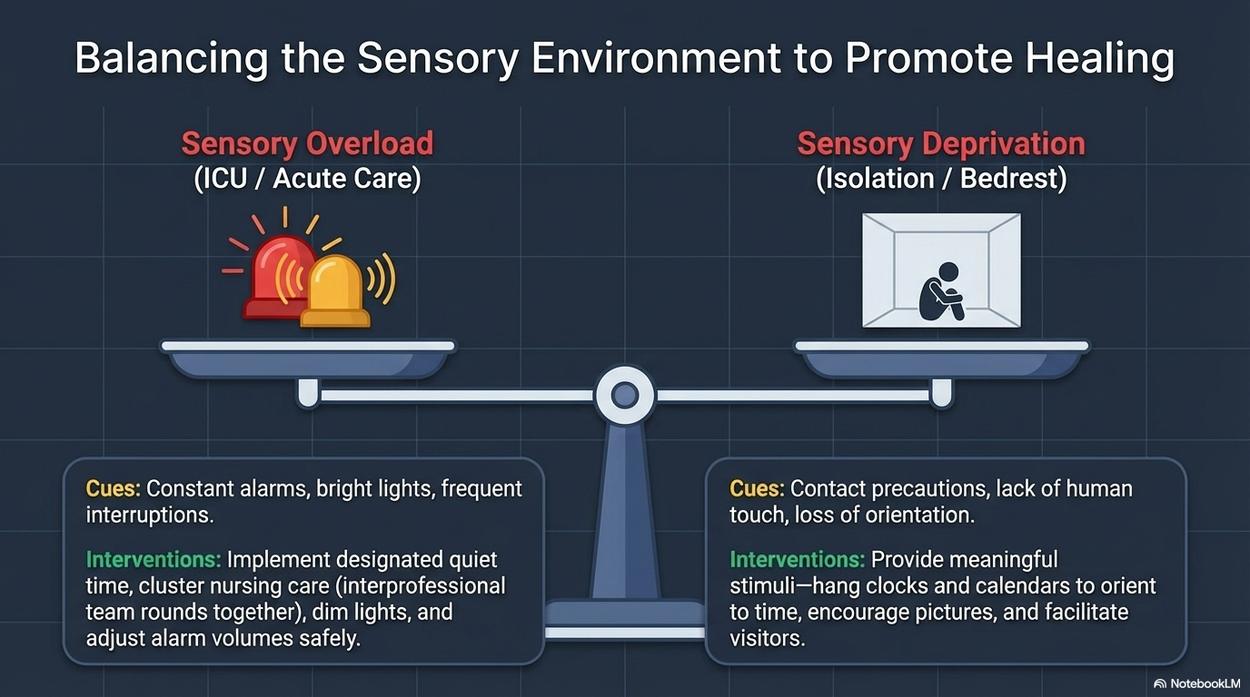
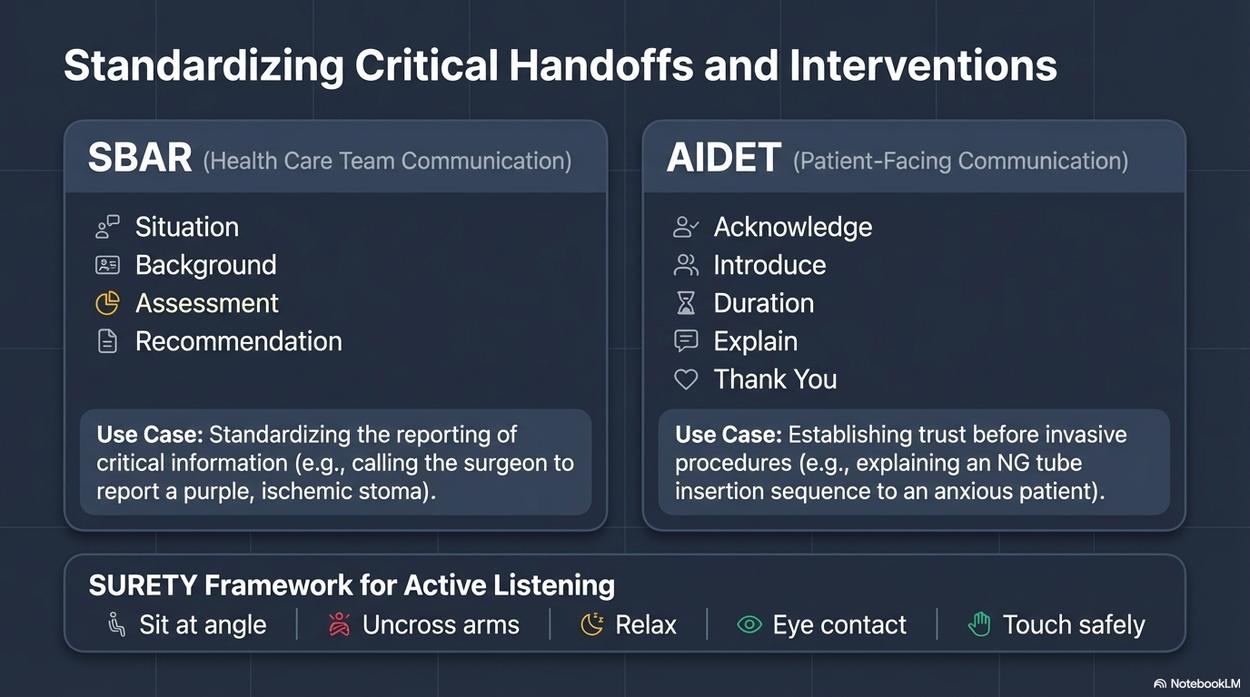
SBAR for team reporting, AIDET for patients, plus the SURETY framework for active listening.
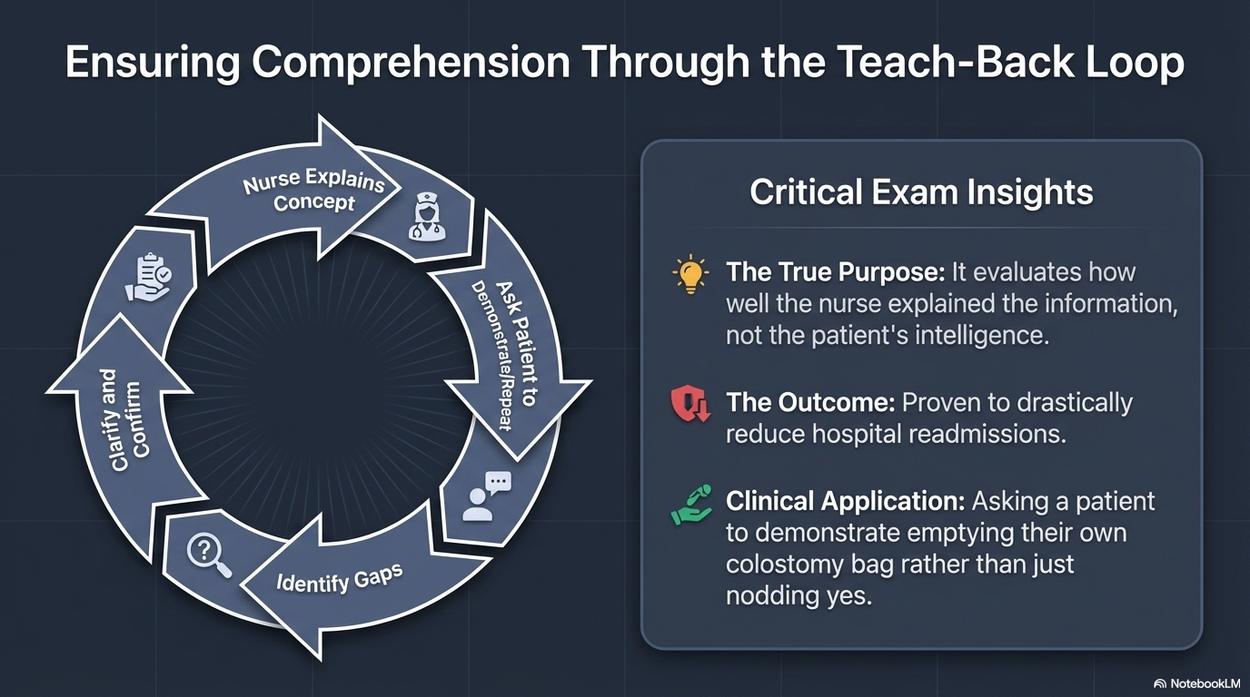
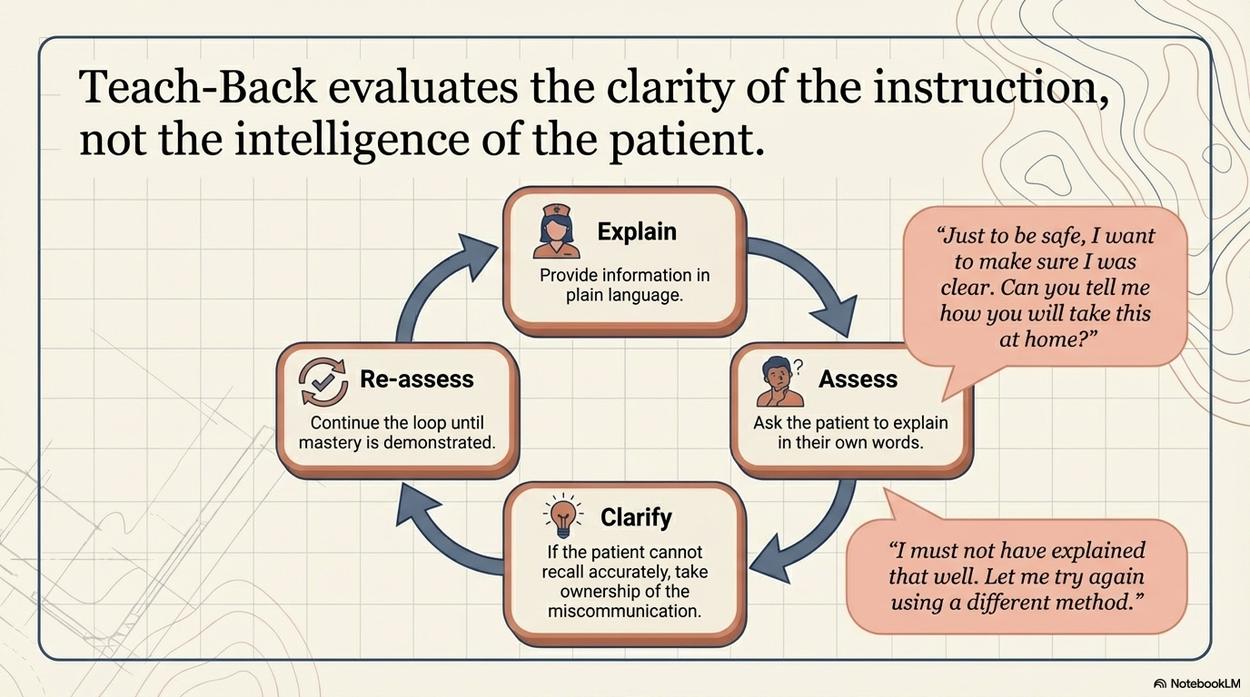
Explain, ask for demonstration, identify gaps, clarify; it tests the nurse's teaching and cuts readmissions.
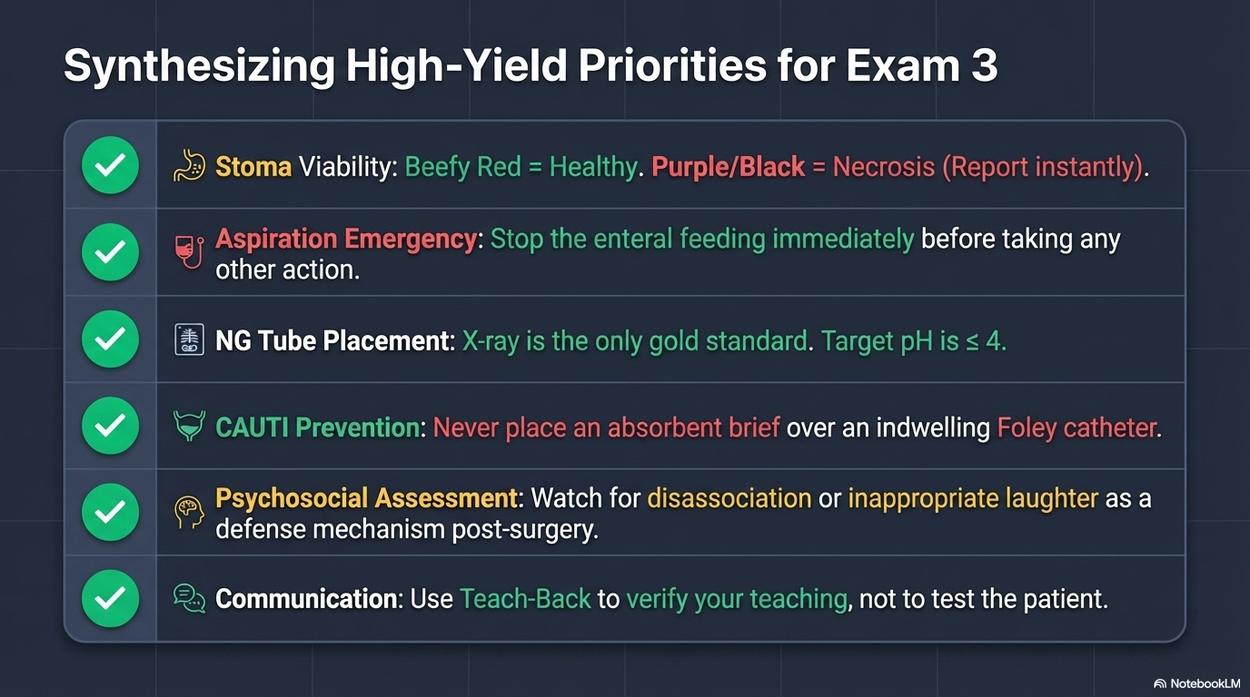
Recap: stoma colors, stop feeding first in aspiration, NG X-ray/pH 4, no brief over Foley, teach-back.
Communication, education, loss & grief
Title slide: mastering communication, education, and compassion in the nurse-patient partnership.
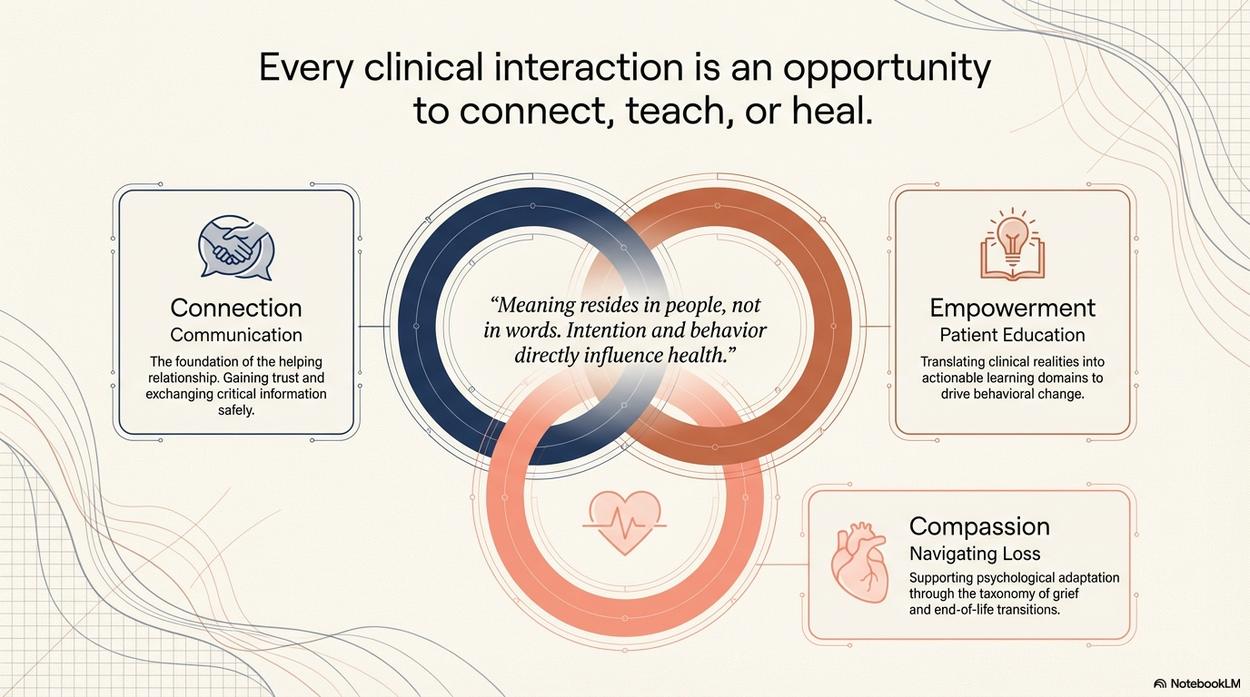
Roadmap of the three units: Connection (communication), Empowerment (patient education), Compassion (loss).
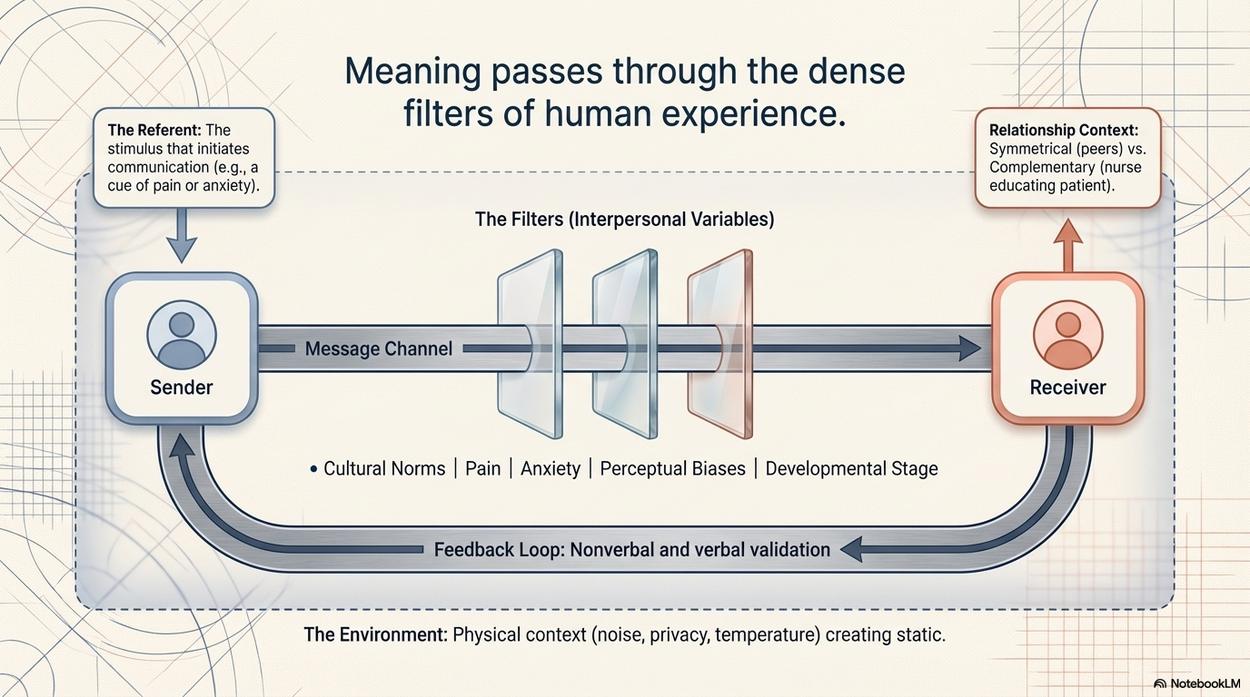
Referent, sender, message channel, receiver, feedback loop, environment; interpersonal variable filters.
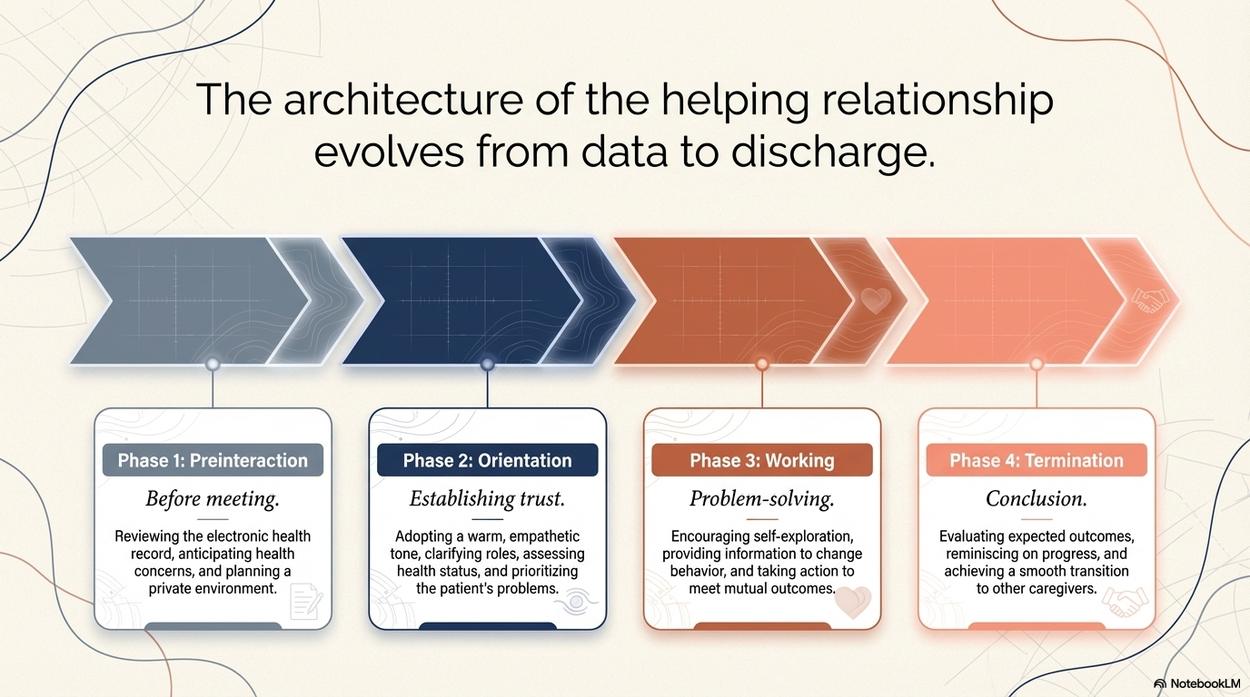
Preinteraction, Orientation, Working, Termination phases with nurse actions for each.
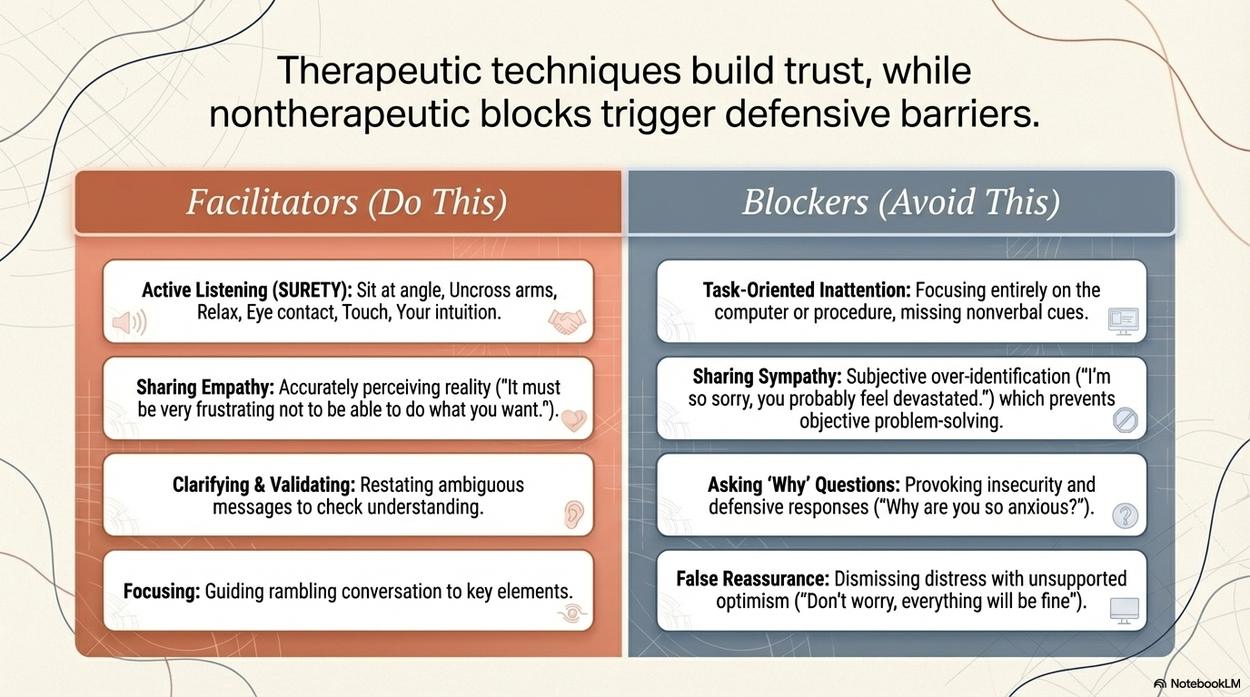
SURETY listening, empathy, clarifying, focusing vs. sympathy, 'why' questions, false reassurance.
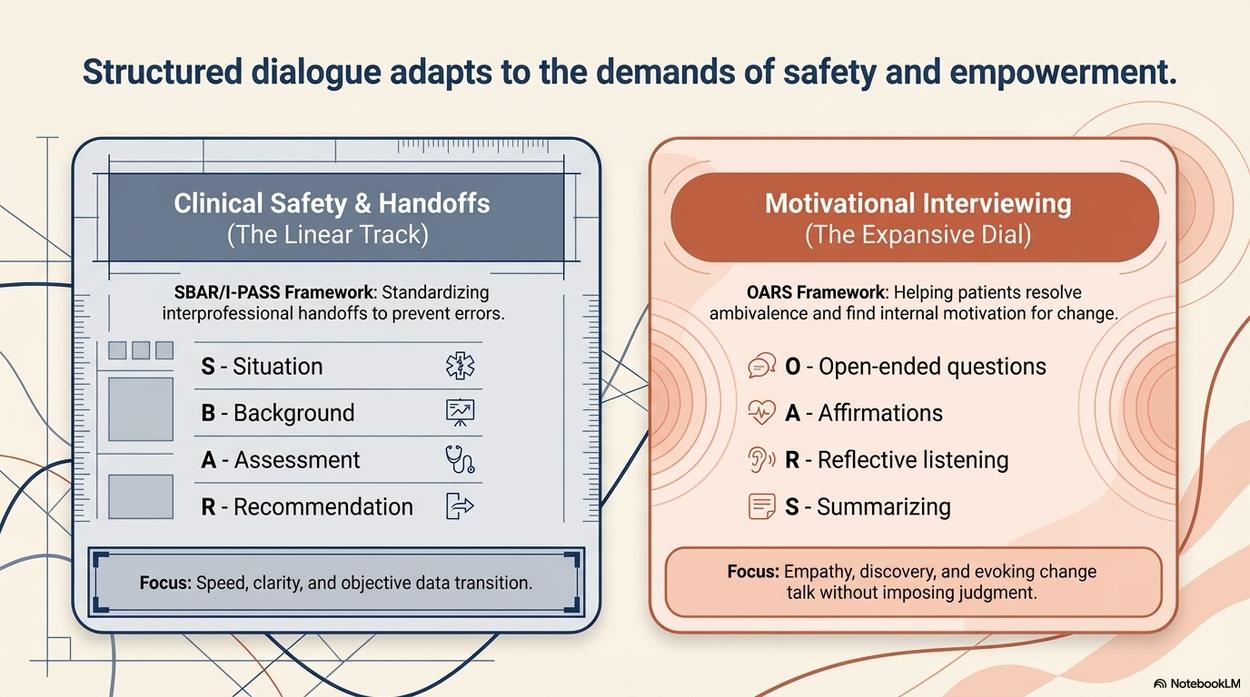
SBAR/I-PASS (Situation, Background, Assessment, Recommendation) vs. OARS (Open, Affirm, Reflect, Summarize).
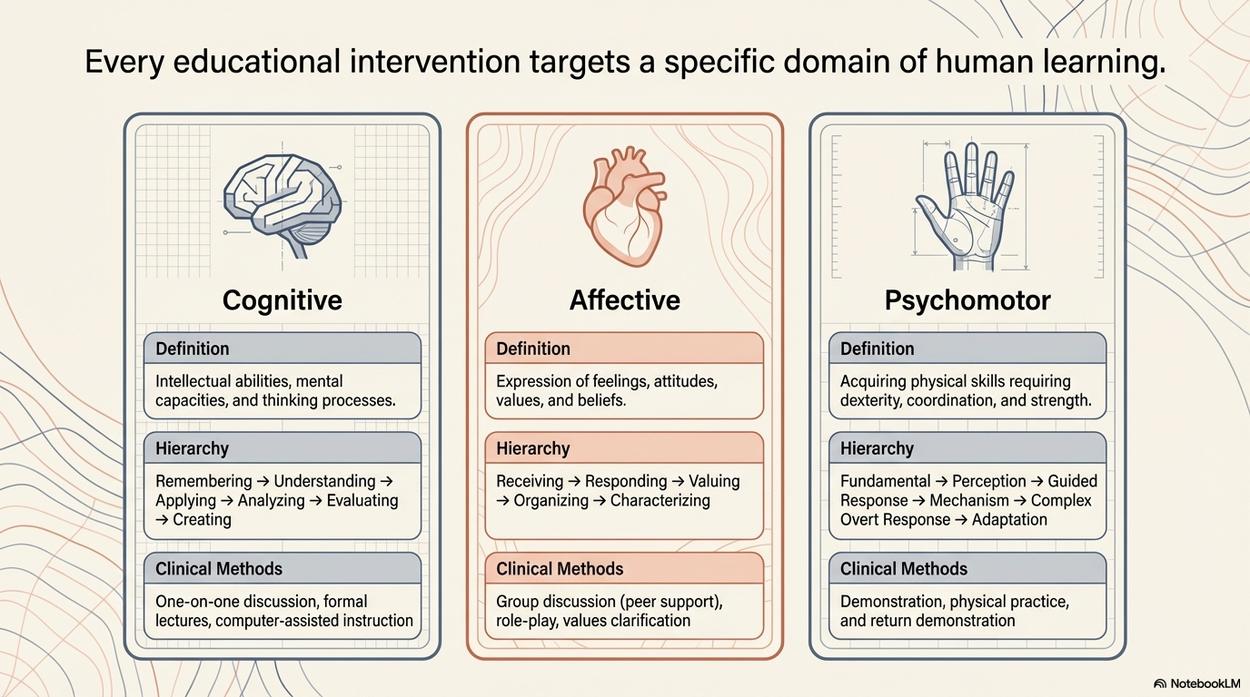
Cognitive, Affective, Psychomotor domains with each hierarchy and matching teaching methods.
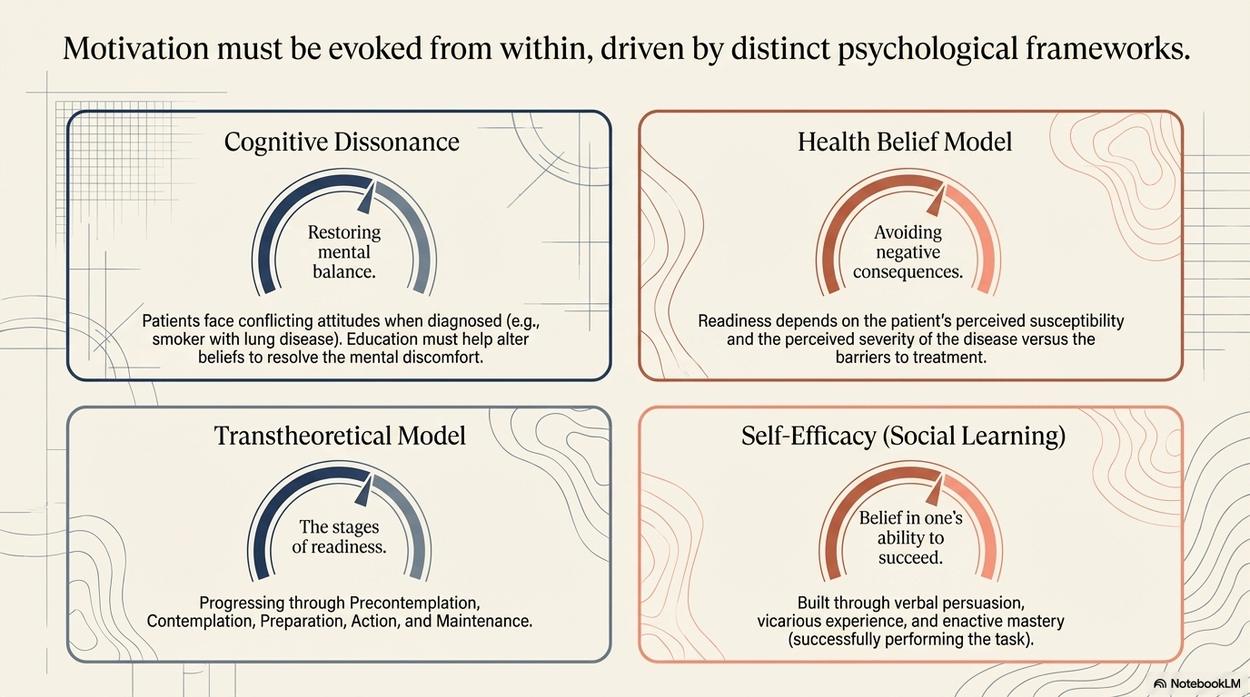
Cognitive Dissonance, Health Belief Model, Transtheoretical stages (Precontemplation-Maintenance), Self-Efficacy.
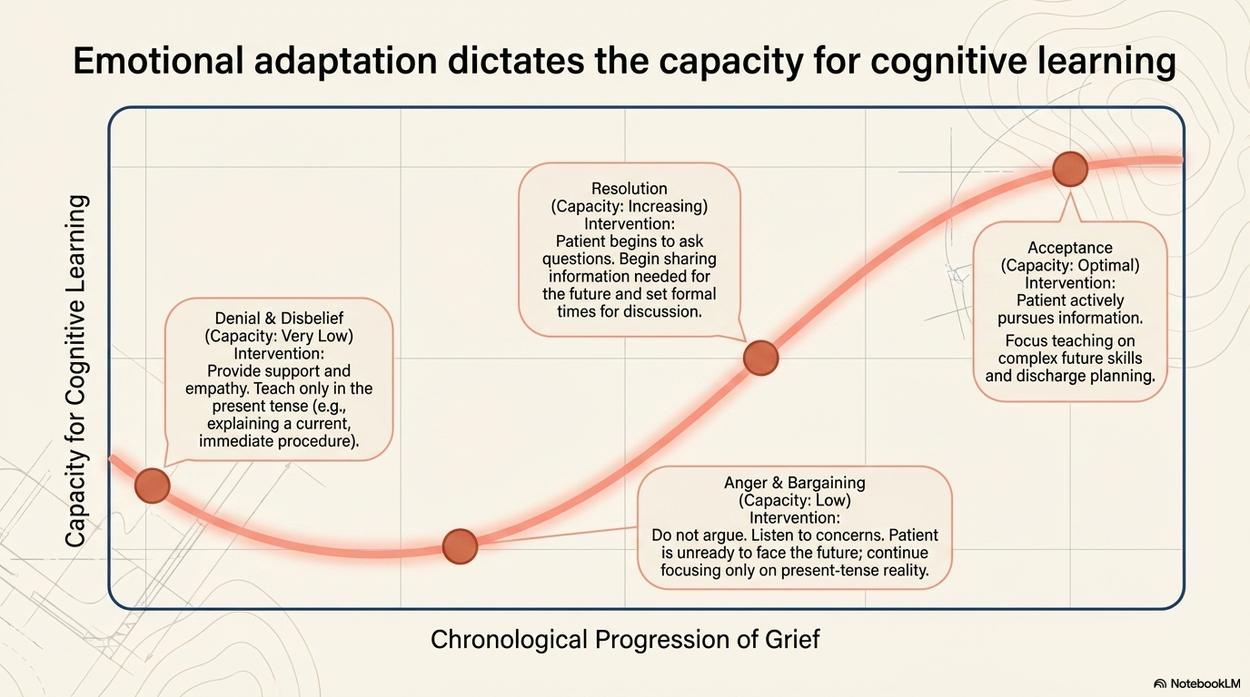
Teaching adapted to Denial, Anger/Bargaining, Resolution, Acceptance; teach present-tense only in early stages.
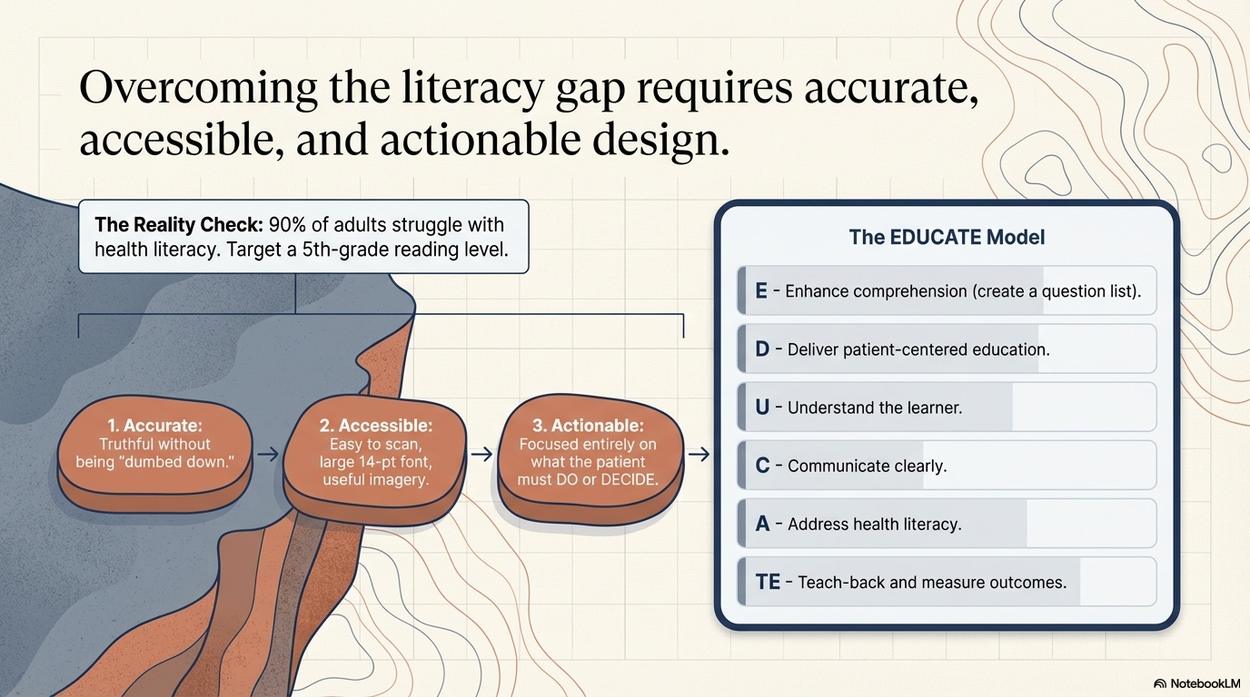
90% struggle with literacy; 5th-grade reading level, 14-pt font; accurate/accessible/actionable; EDUCATE steps.
Explain, Assess, Clarify, Re-assess loop with sample scripts; nurse owns the miscommunication.
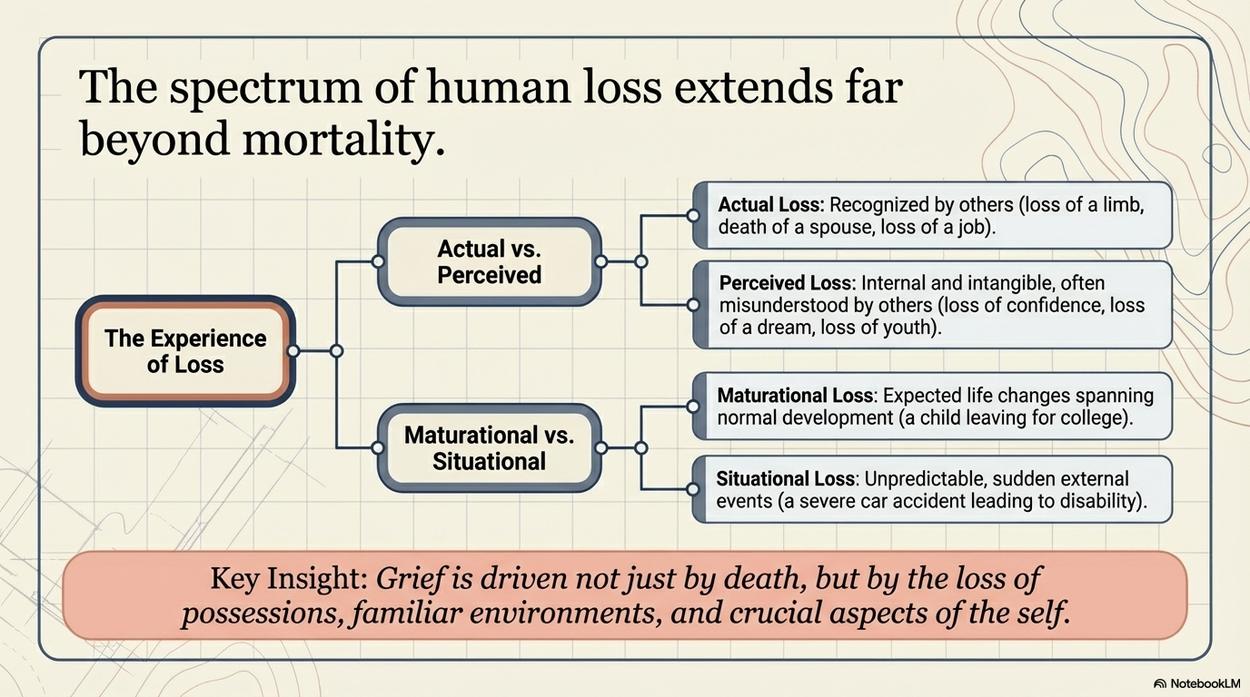
Actual vs. perceived loss and maturational vs. situational loss, each with clinical examples.
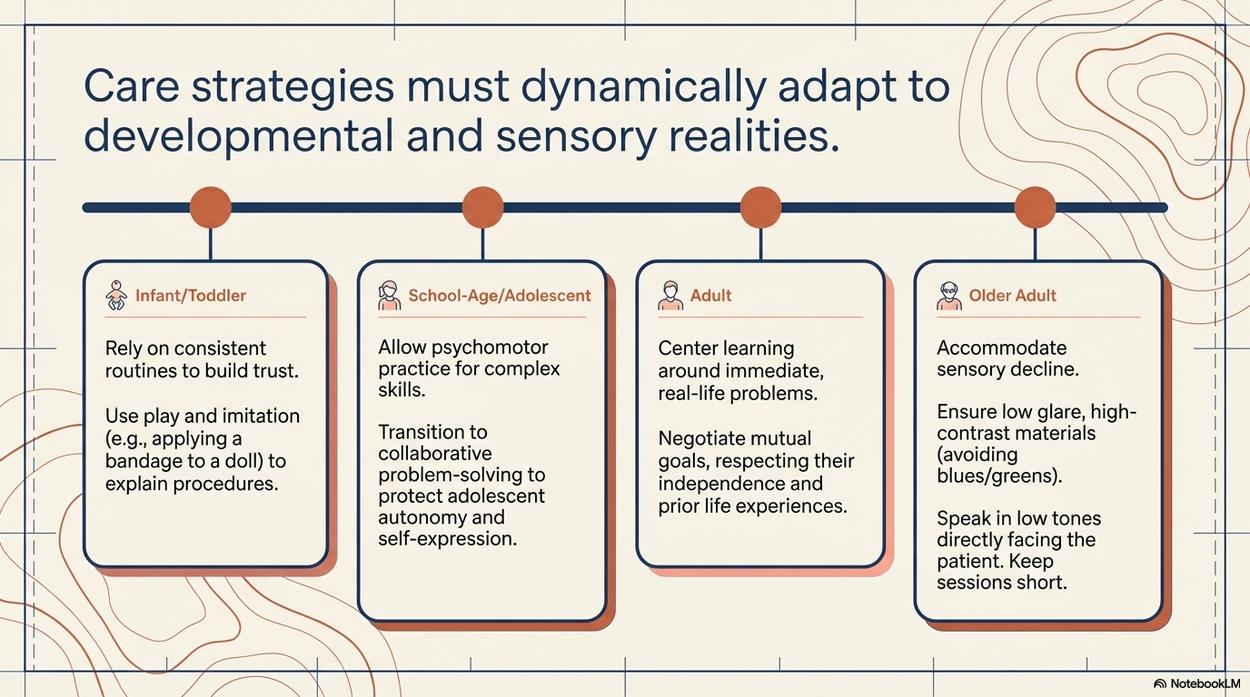
Infant/toddler play and routines, adolescent autonomy, adult problem-centered, older adult sensory accommodations.
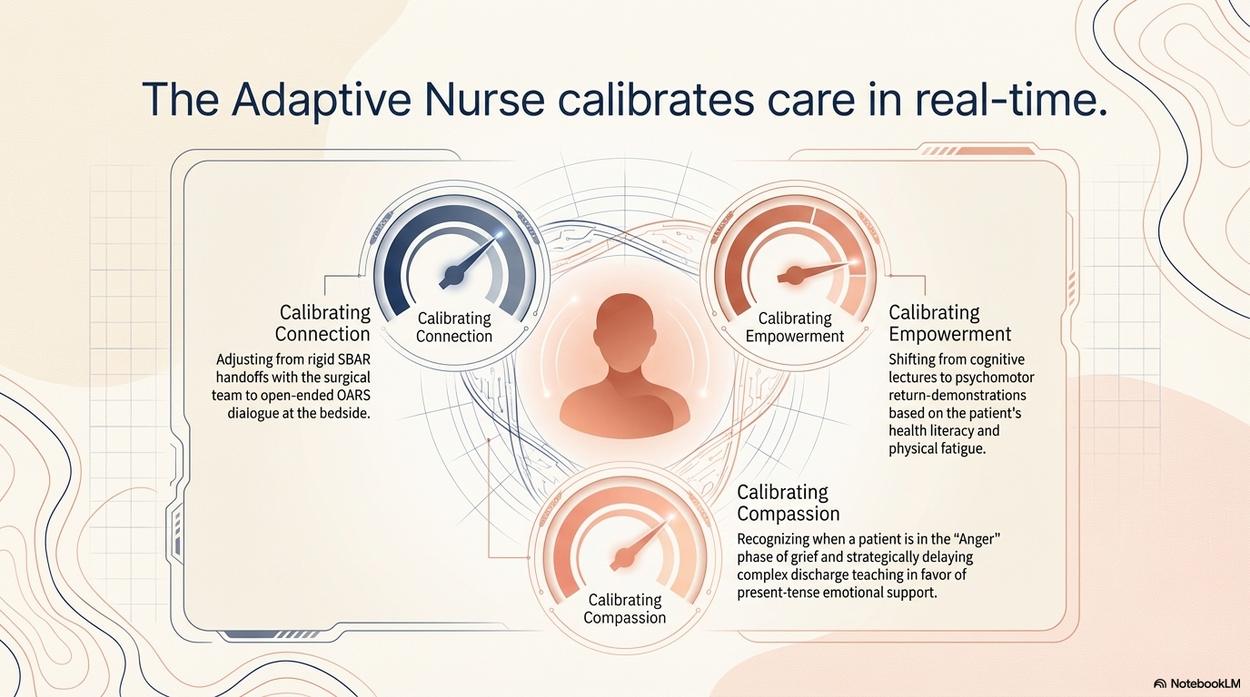
Synthesis: calibrating Connection (SBAR to OARS), Empowerment (lecture to return-demo), Compassion (grief timing).
Closing summary: meaning resides in the patient, motivation is evoked not installed, presence is an intervention.

Rest & sleep, pain & complementary therapy
Title slide for NUR125 Modules 13 & 14: stress, sleep, pain, and complementary therapies.
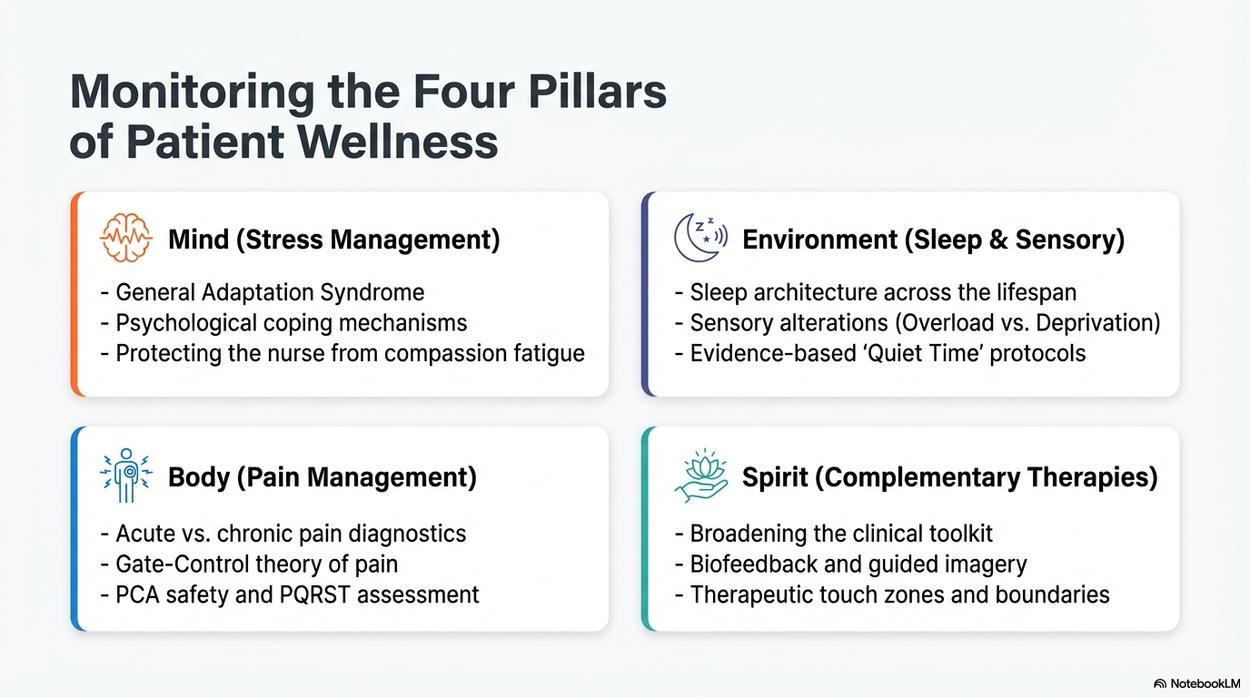
Agenda: Mind (GAS, coping), Environment (sleep, sensory), Body (gate-control, PCA, PQRST), Spirit (CAM).
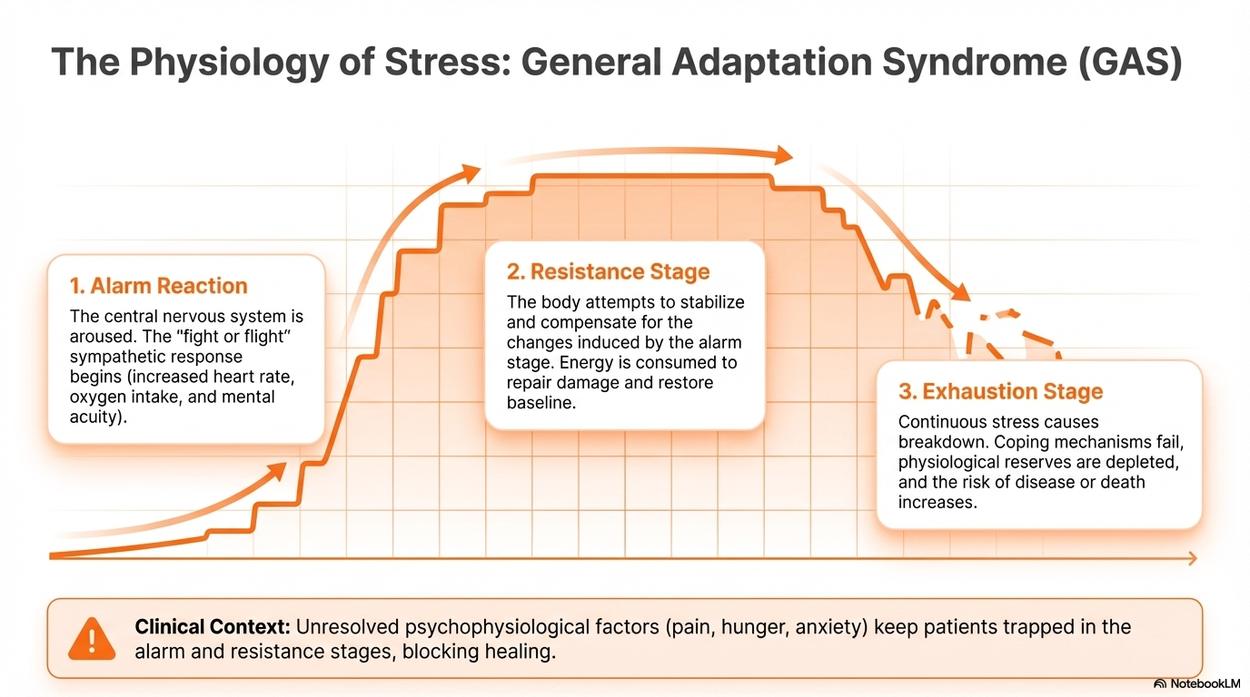
Alarm reaction, Resistance stage, Exhaustion stage; unresolved pain and anxiety trap patients in alarm/resistance.
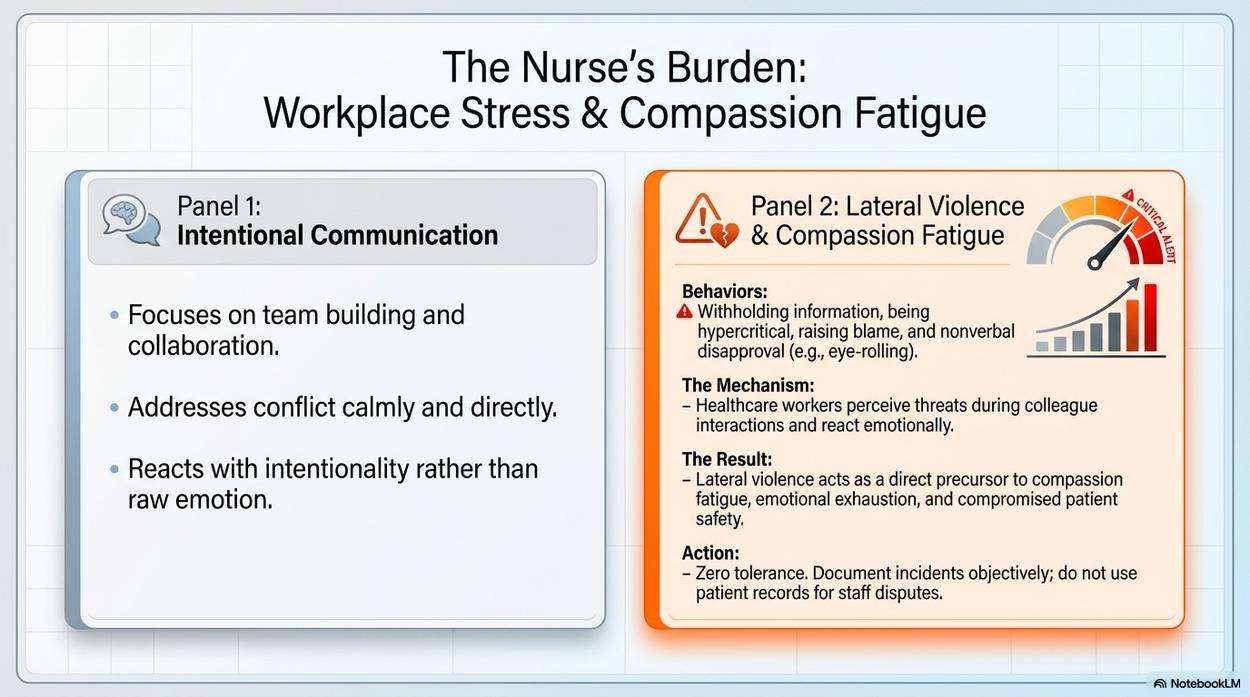
Intentional communication vs. lateral violence behaviors; lateral violence as precursor to compassion fatigue.
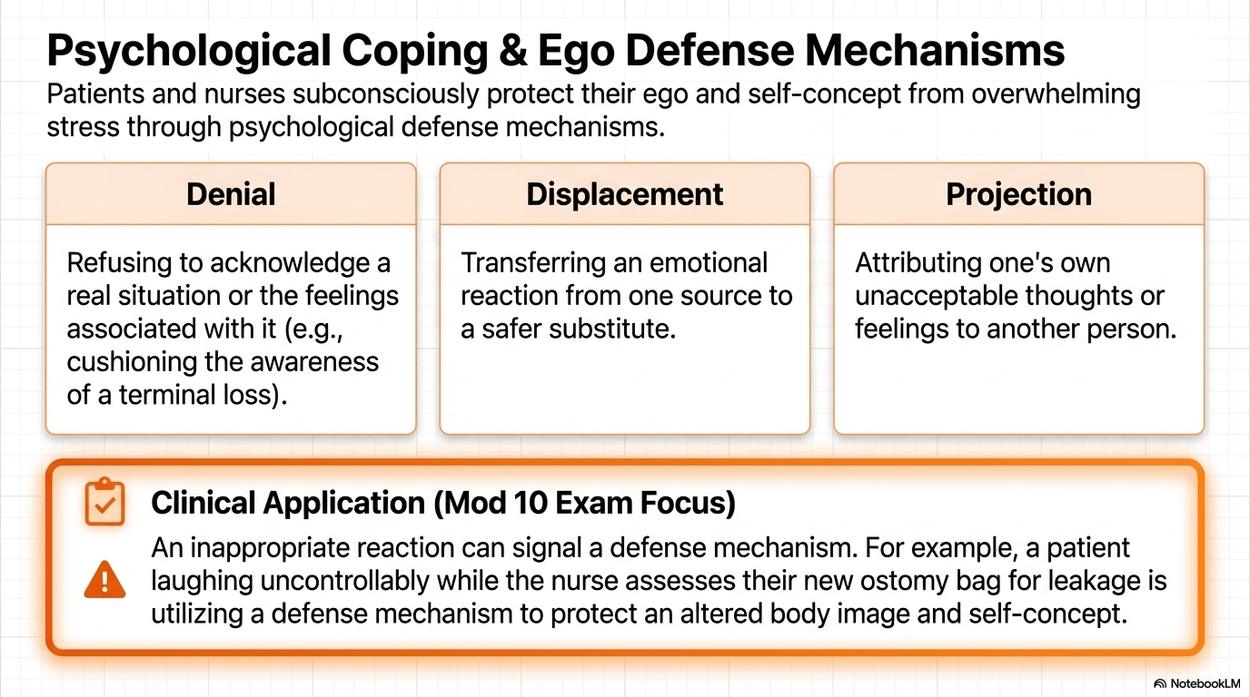
Denial, Displacement, Projection defined; ostomy-bag laughter example protecting altered body image.
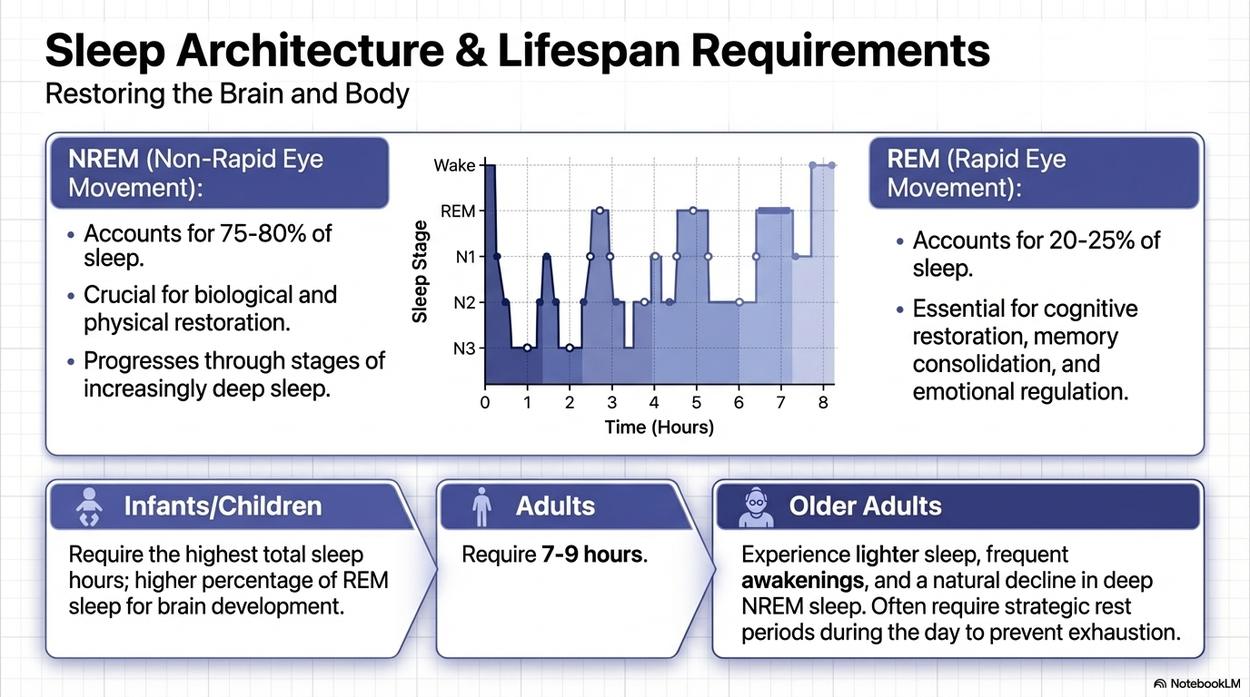
NREM 75-80% physical restoration vs. REM 20-25% cognitive; adults need 7-9 hours; older adults sleep lighter.
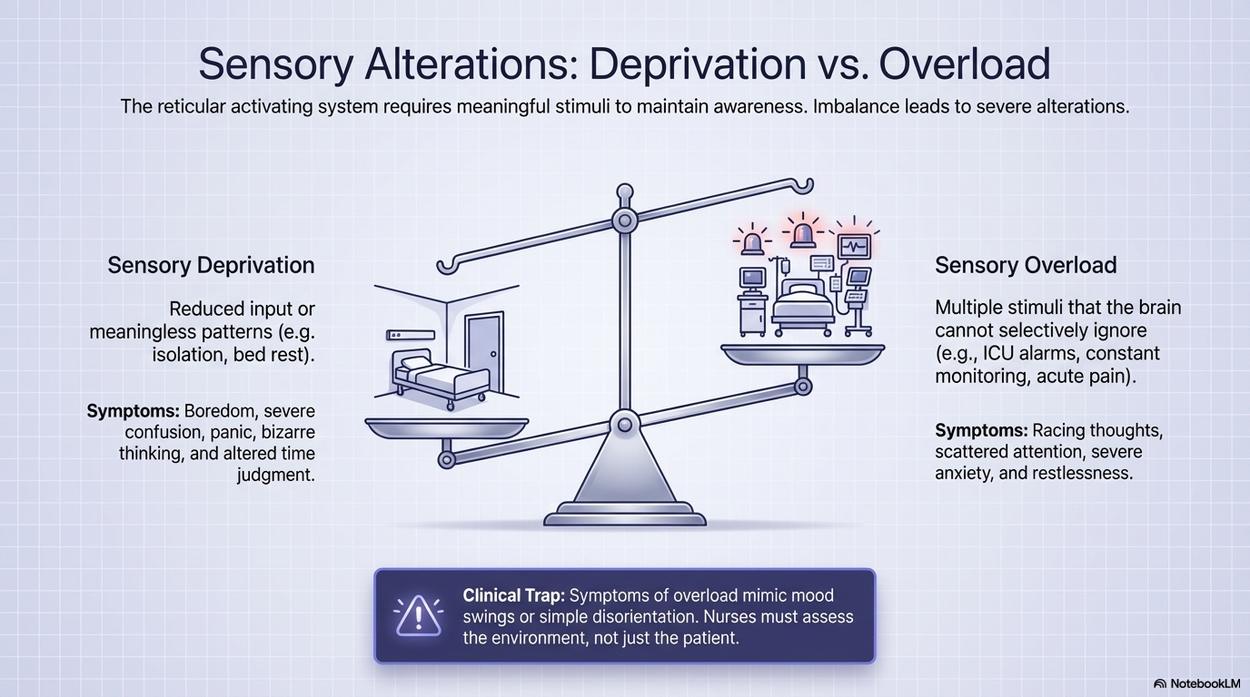
Reticular activating system; deprivation causes confusion and panic, overload causes racing scattered thoughts.
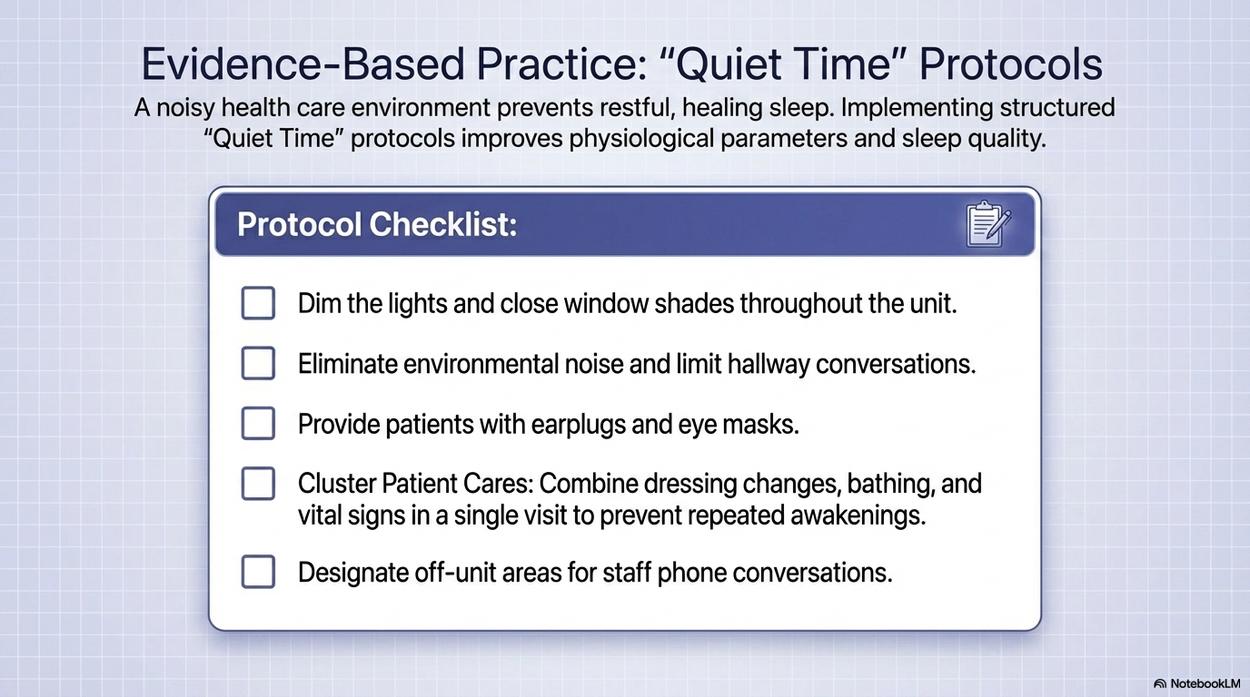
Checklist: dim lights, cut noise, earplugs and eye masks, cluster cares, off-unit staff phone areas.
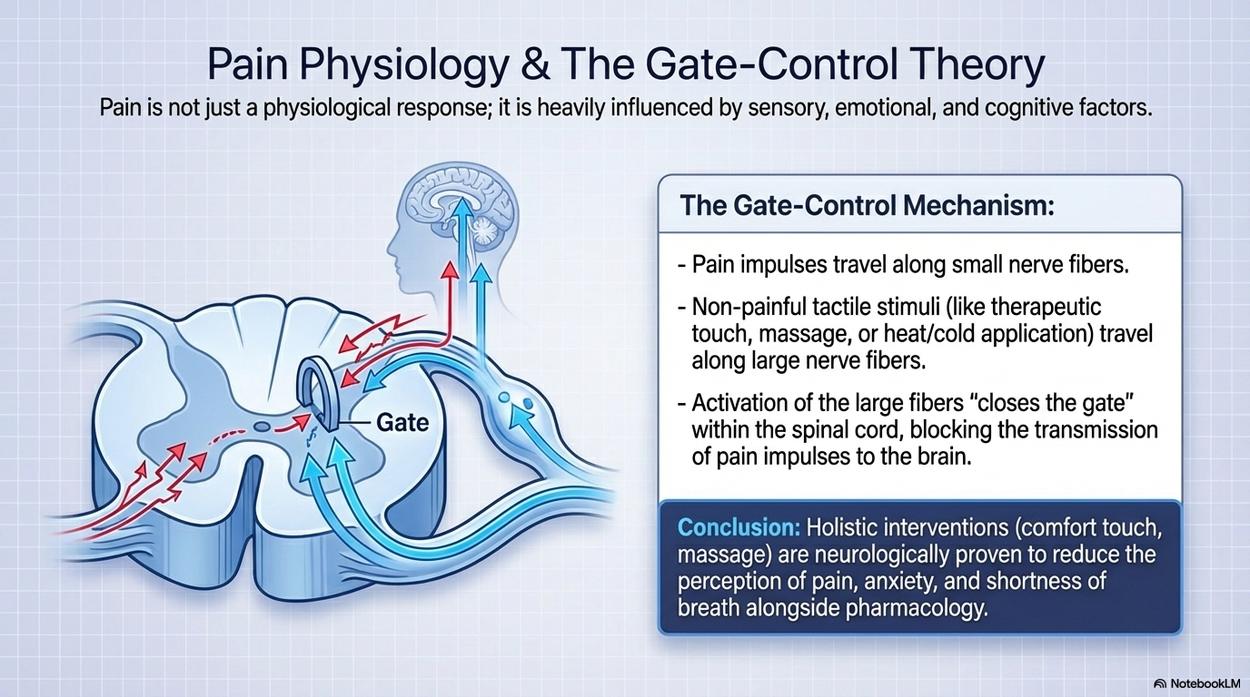
Small fibers carry pain, large fibers (touch, massage, heat/cold) close the spinal gate blocking transmission.
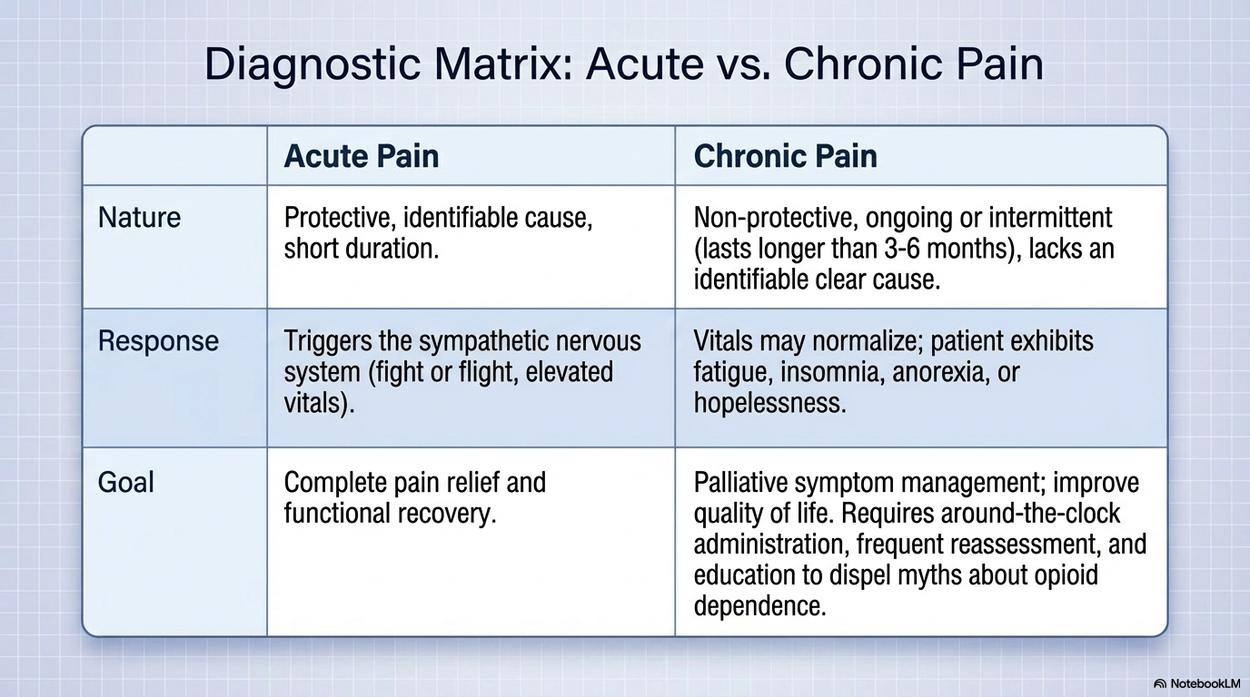
Compares nature, response, and goal; chronic pain lasts 3-6+ months and needs around-the-clock dosing.
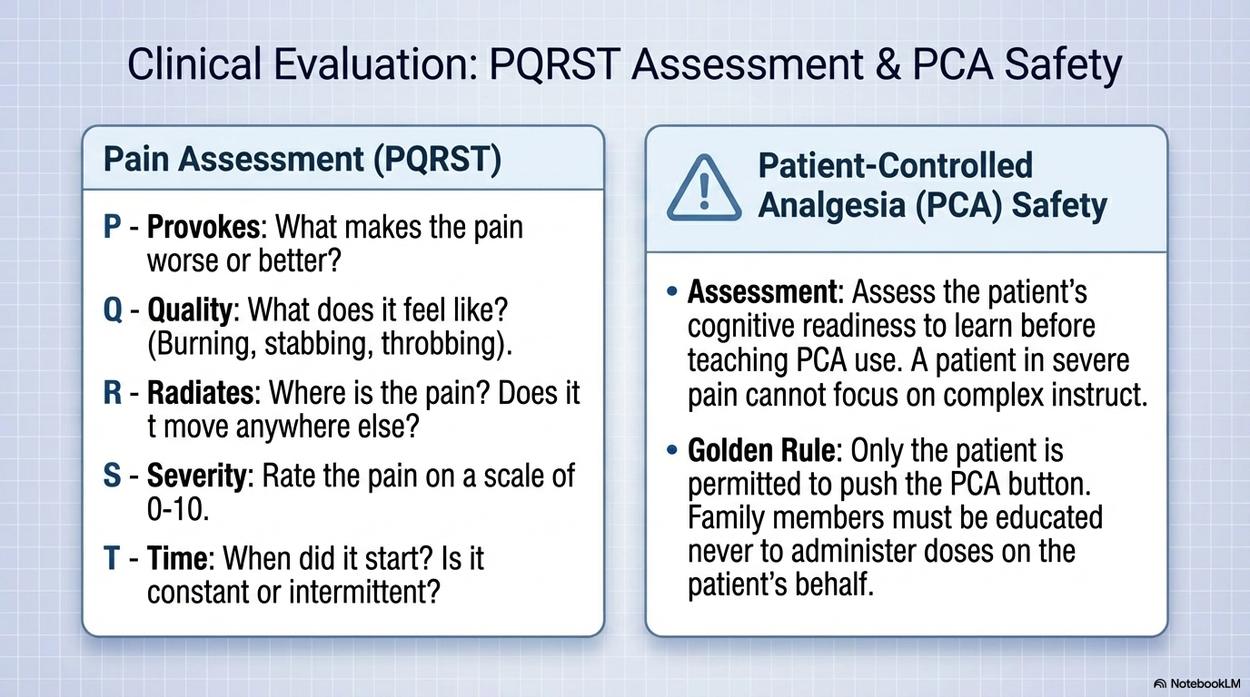
PQRST (Provokes, Quality, Radiates, Severity 0-10, Time) plus PCA golden rule: only the patient pushes the button.
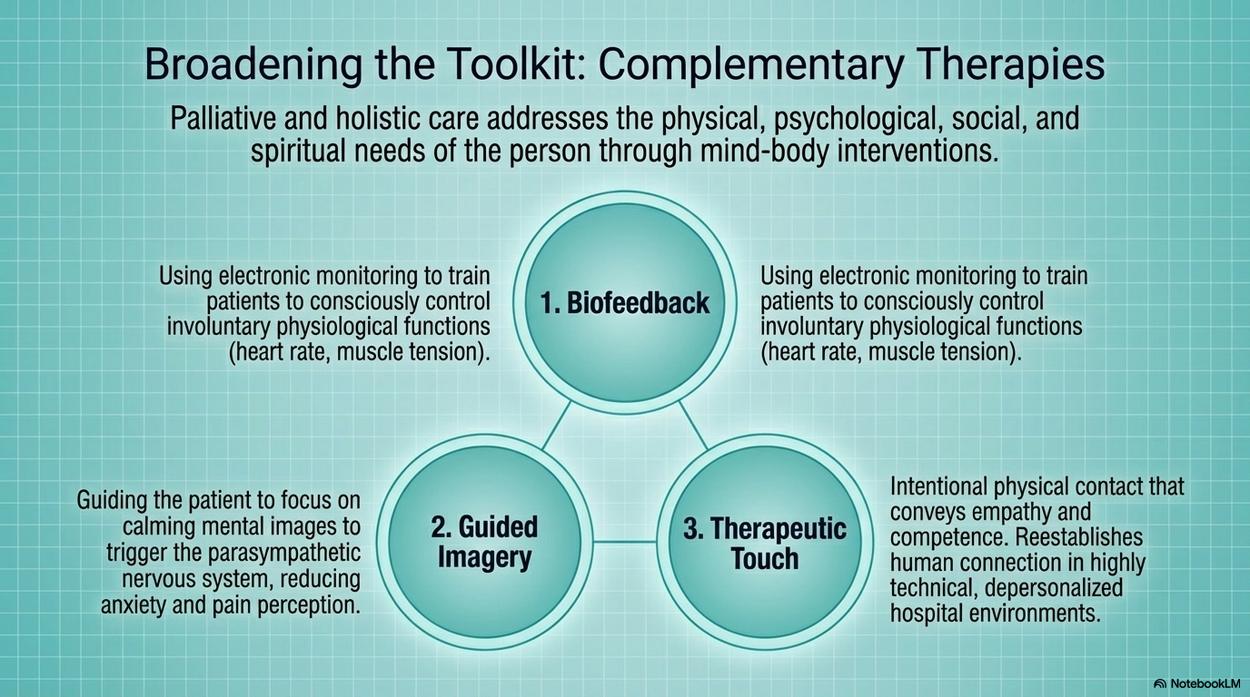
Biofeedback, guided imagery (parasympathetic activation), and therapeutic touch as mind-body interventions.
Social, Consent, Vulnerable, and Intimate touch zones with body areas and permission level for each.

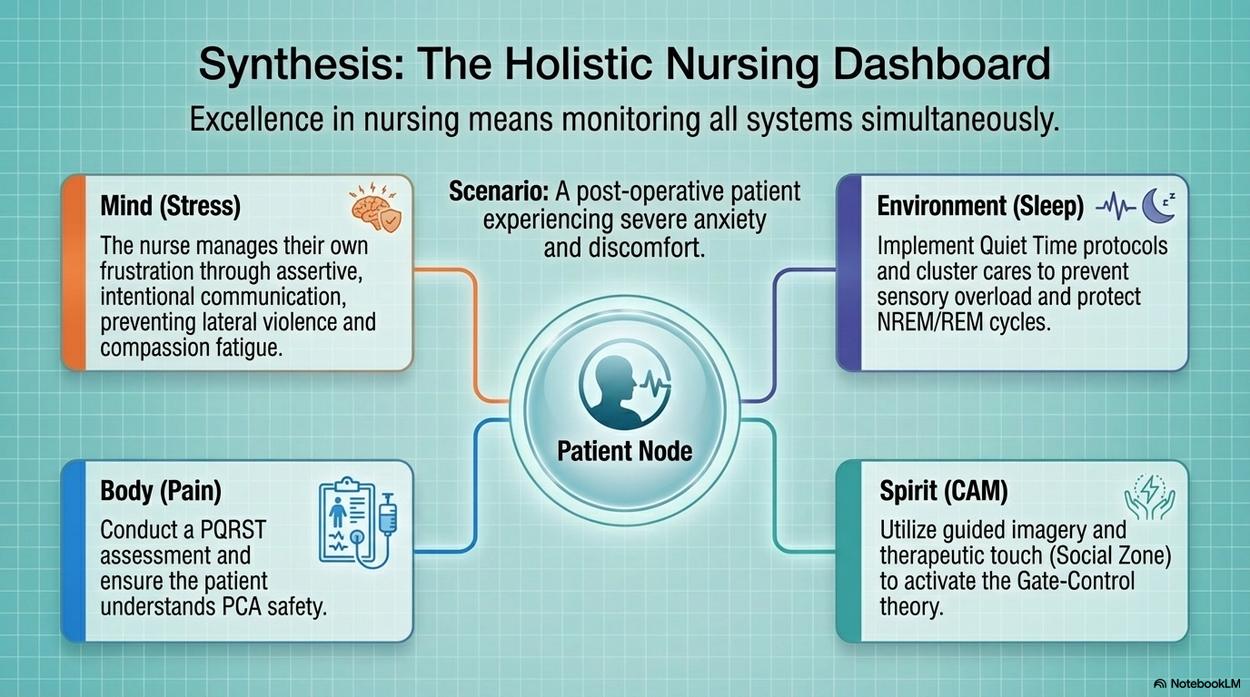
Post-op anxious patient scenario applying Mind, Environment, Body, and Spirit interventions together.
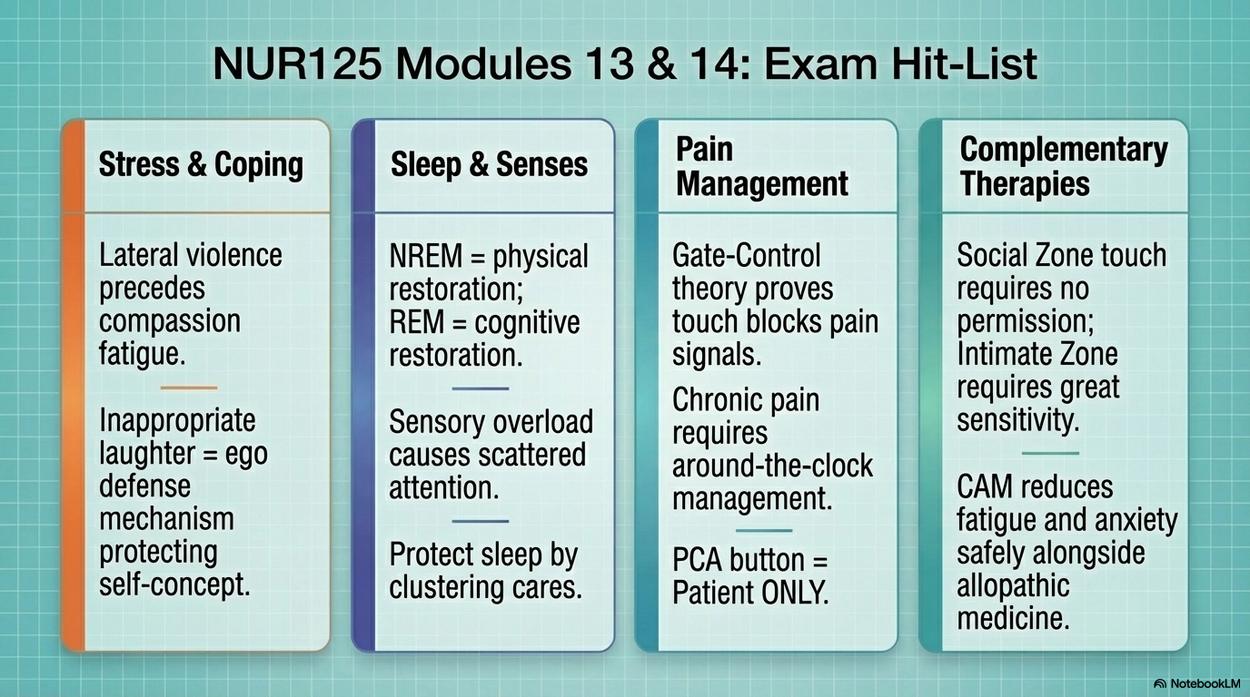
Summary of high-yield points across stress/coping, sleep/senses, pain management, and complementary therapies.
NUR 125 · Nursing Fundamentals